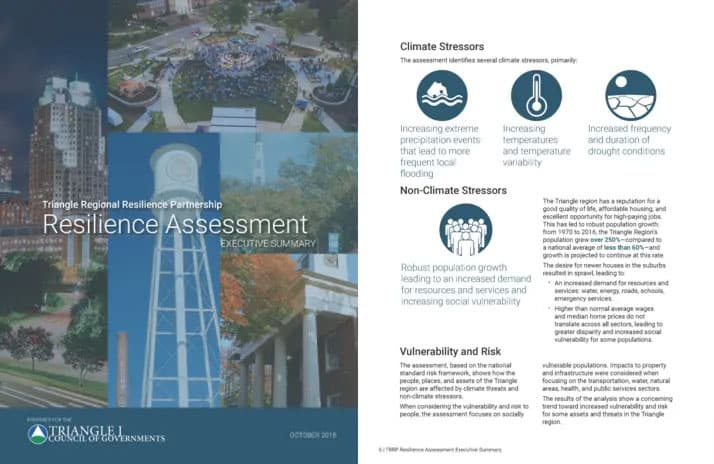
Triangle Regional Resilience Partnership Resilience Assessment Executive Summary.
Extreme weather, heat, drought and rapid growth affect individual communities differently, but the systems those communities rely on are deeply connected.
The Triangle Regional Resilience Partnership brought cities, towns and counties in the region’s urban core together to better understand those shared vulnerabilities. The partnership assessed regional stressors and assets, identified where systems were most vulnerable and developed strategies communities could use as they planned for changing conditions.
Understanding Shared Vulnerability
The assessment considered changing regional conditions including more frequent extreme weather, increasing temperatures, changes in drought and growing demand for resources.
Instead of looking at each jurisdiction independently, the work examined vulnerability at a regional scale. That approach helps communities understand how risks in one place can affect infrastructure, natural systems and services beyond its boundaries.
Stressors
Understand environmental and climate conditions that may place pressure on communities and regional systems.
Assets
Identify the infrastructure, natural resources and community systems that may be exposed to those pressures.
Strategies
Develop approaches communities can use individually and collectively to reduce vulnerability and strengthen resilience.
A Regional Resource for Local Planning
The partnership was completed in 2019 as a joint project involving four municipalities and two counties. Central Pines administered and facilitated the work, creating a forum for local governments to compare concerns and develop a common assessment rather than working in isolation.
The resulting report can support comprehensive planning, climate planning, infrastructure decisions and other local efforts where communities need to consider long-term environmental risk.
Resilience Work Continues
Resilience Work Continues
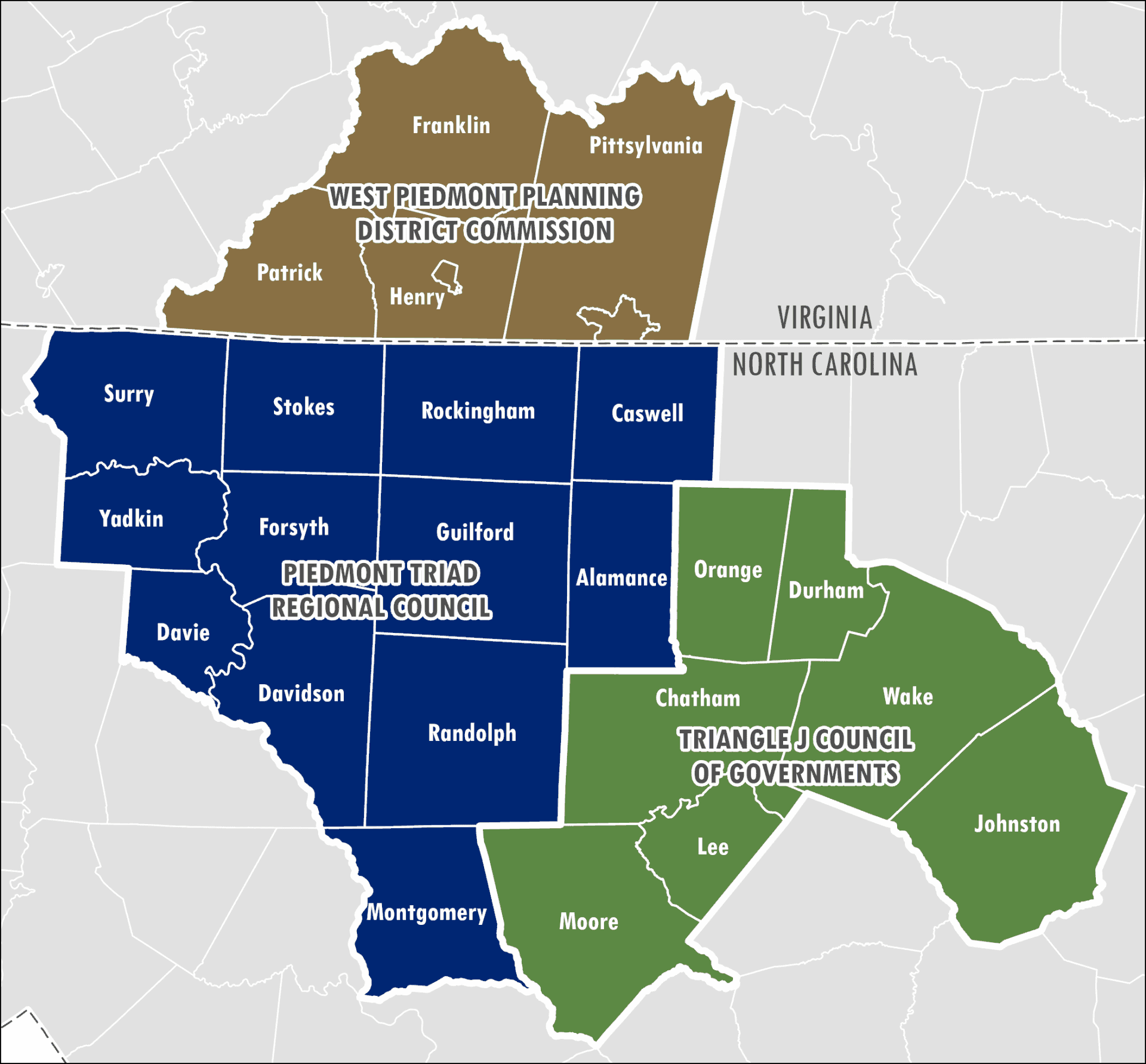
The 2019 assessment is one part of Central Pines’ broader resilience work. Later efforts expanded regional resilience planning into rural communities, including work through North Carolina’s RISE program in Chatham, Johnston, Lee and Moore counties. The legacy Environment & Resilience page describes that process as producing a vulnerability assessment, priority projects and implementation steps for the four-county area. Central Pines Regional Council
Planning for Long-Term Resilience?
Central Pines can help communities understand regional vulnerabilities, connect existing research with local planning and identify opportunities for collaborative resilience work.