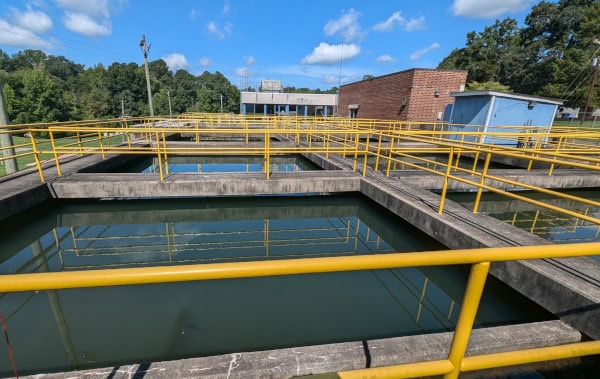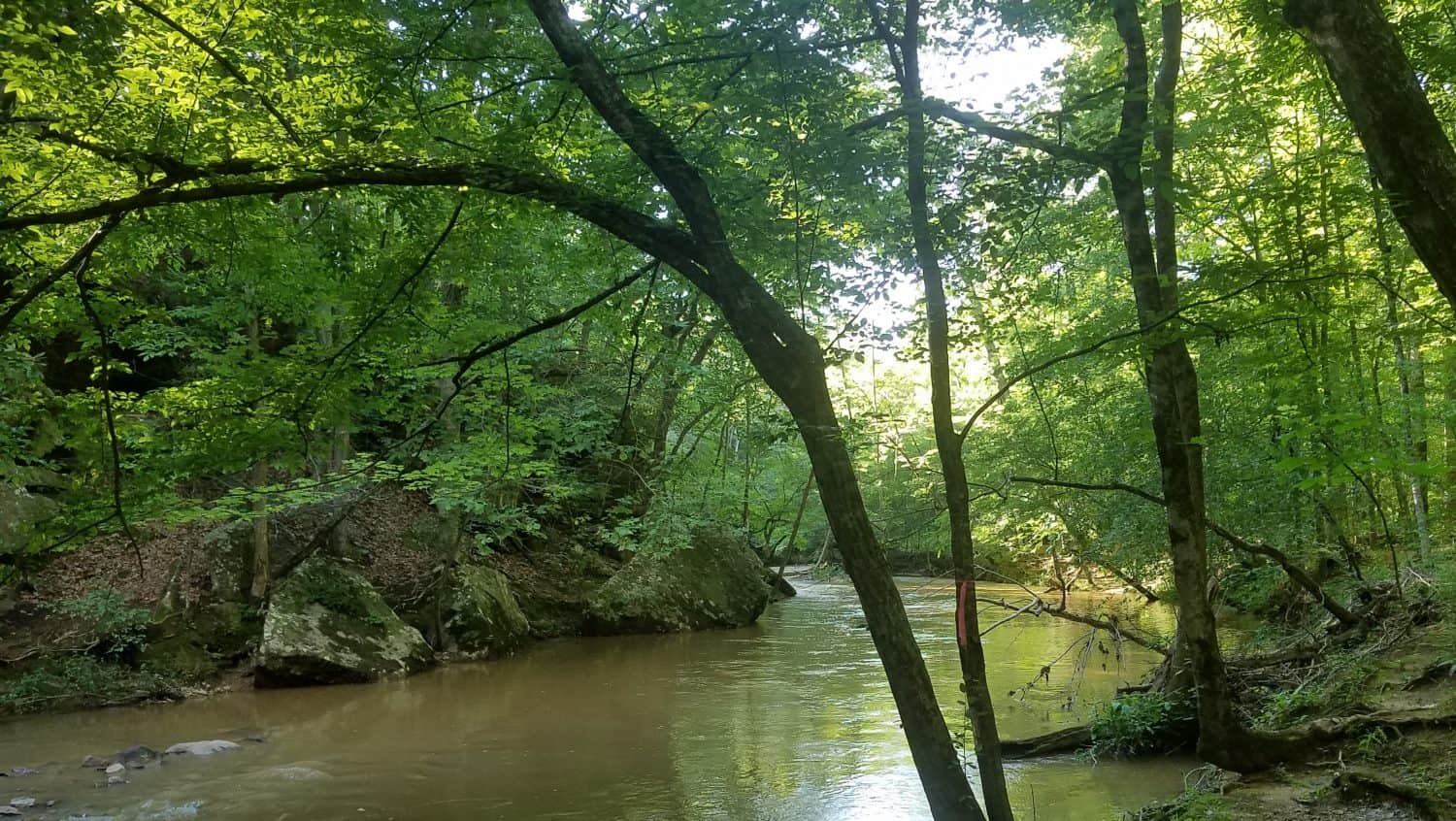
Harris Lake in Wake County, NC.
Clean, reliable drinking water depends on understanding what is happening in the rivers and reservoirs communities share.
Since 1988, the Triangle Area Water Supply Monitoring Program, or TAWSMP, has brought local governments, water providers, Central Pines and the U.S. Geological Survey together to monitor water quality across the Upper Cape Fear River Basin. The long-running partnership gives participating communities consistent information about the streams, rivers and reservoirs that feed regional water supplies.
Rather than each community building a separate monitoring program, the partnership creates a shared body of data that can help local water providers understand long-term conditions and respond to new concerns as they emerge.
More Than Three Decades of Regional Monitoring
Water-quality conditions change over time. Population growth, development, changing land uses and emerging contaminants all create new questions for communities responsible for protecting drinking-water supplies.
TAWSMP provides continuity. By collecting information over many years, the partnership can look beyond a single sampling event and help participating communities understand broader trends.
| Year(s) | Impact |
|---|---|
| 1988 | Regional water-supply monitoring begins. |
| 2022–2027 | Phase IX continues monitoring of regional rivers and reservoirs while expanding work to include PFAS. |
| 2027–2032 | Partners are planning the next phase, with microplastics among the emerging issues being explored. |
A Partnership Built Around Shared Water
A Partnership Built Around Shared Water
Current partners include Apex, Cary, TriRiver, Durham, Hillsborough, Orange County, Orange County Water and Sewer Authority, Central Pines and the U.S. Geological Survey.
The program is designed around a simple regional reality: communities may operate separate water systems, but many depend on connected rivers, reservoirs and watersheds.
Measure Conditions
Collect consistent information about water-quality conditions in streams, rivers and reservoirs.
Track Change
Use long-term records to identify trends and better understand how conditions are changing.
Prepare for Emerging Issues
Expand monitoring as new contaminants and water-quality concerns become important to regional water providers.
Why Regional Monitoring Matters
Why Regional Monitoring Matters
Regional water monitoring gives participating communities a stronger foundation for local decision-making. It helps utilities and local governments understand conditions beyond their own jurisdictional boundaries and provides a shared technical base for conversations about source-water protection, treatment and future water needs.
Central Pines provides the regional coordination that helps maintain those relationships and keep the program working across jurisdictions.
Questions About Regional Water Monitoring?
Connect with Central Pines to learn more about the monitoring partnership, participating water systems or regional water-resource work.