
Emergency Management & Resilience
Helping communities prepare for disruption, reduce risk and recover with stronger systems in place.

Program Details
Emergencies and long-term risks rarely stop at jurisdictional boundaries. Severe weather, flooding, extreme heat, infrastructure failures and other disruptions can affect communities across an entire region.
Central Pines helps local governments prepare for those challenges together. Our role focuses on regional coordination, planning and technical assistance: helping communities understand risk, strengthen preparedness and recovery systems, identify practical resilience projects and connect plans with partners and funding.
That work extends from emergency preparedness and disaster recovery to longer-term resilience planning that helps communities adapt to changing conditions and reduce future risk.
Services At a Glance
Explore The Details
Program Services & Information
Program Services & Information
Prepare for Disruption
Build the plans, relationships and administrative capacity communities need before an emergency becomes a recovery challenge.

Emergency Preparedness & Recovery
Central Pines supports local governments by connecting communities with preparedness and recovery resources, sharing regional information and helping partners coordinate across jurisdictional lines.
The goal is not to replace local emergency management agencies. It is to strengthen the regional connections that help communities prepare, recover and learn from one another.
Prepare
Connect local governments with planning resources, guidance and regional partners before disruptive events occur.
Coordinate
Support communication and collaboration when challenges affect multiple communities or systems.
Recover & Adapt
Help communities connect immediate recovery needs with longer-term planning and resilience.
Local Preparedness & Recovery Resources
Local Preparedness & Recovery Resources
North Carolina Emergency Management
State emergency preparedness, response and recovery information.
Guidance for North Carolina local governments, including emergency declarations, contracting, procurement and recovery administration.
National Weather Service — Raleigh
Forecasts, warnings and severe-weather information for much of the Triangle region.
Tropical Storm & Hurricane Emergency Resources
Tropical Storm & Hurricane Emergency Resources
Pre-storm Preparedness
- National Preparedness Month Resources
- U.S Census Preparedness Data
- NCSU Hurricane Preparedness check-list(opens in a new tab)
- Public Records Safety: The State Archives of NC encourages all agencies to begin preparation to protect records. Best practices include the following:
- Stabilize your records storage area and ensure records are 3-6 inches off the floor, in record boxes, clearly labeled, removed from bottom drawers, and covered to protect from water damage
- Locate the records and disposition schedule for records in your office
- Compile an inventory of records and their location
- Compile information on disaster recovery vendors
- Compile an emergency staff contact list
- Employer Emergency Preparedness & Emergency Transportation Options
Post-storm Recovery
- Disaster Recovery Guide
- Legal Services and Disaster Assistance for Older Adults
- Duke Energy Outage Tracking
- School of Government Resource Site
- Sample documents such as state of emergency declarations and debris removal contracts are available at the “Sample Documents” link.
- Disaster Overtime Pay Reimbursement and Personnel Policy Provisions guide sheet prepared on FEMA reimbursement requirements
- FEMA procurement guidelines and contracting check-list are available at the “Sample Documents” link.
- FEMA Procurement Disaster Assistance Team (PDAT) resources (including procurement guidelines, contract provisions, etc.).
- Helping Local Businesses Recover from Disasters (SBTDC and other partner organizations)
- Helping Local Businesses Get Disaster Contracts (SBTDC PTAC assistance)
- The NC Procurement Technical Assistance Center (PTAC) can educate businesses in your community on vendor registration and where to find opportunities, review bids/proposals and provide guidance on contracts.
- NC League of Municipalities Emergency Preparedness resources
Recovery Planning & Financial Readiness
Federal disaster assistance can bring substantial resources into a community after a declared disaster, but successful recovery depends on systems that are often needed before funding arrives.
Central Pines has helped member governments understand FEMA Public Assistance and strengthen the financial and administrative practices needed to manage recovery funding effectively. That includes planning for documentation, reporting, financial controls and the connection between recovery decisions and longer-term local priorities.
Understand Requirements
Help staff understand the documentation, eligibility and administrative responsibilities that accompany disaster-recovery funding.
Strengthen Financial Systems
Prepare local processes for managing, tracking and reporting recovery expenditures.
Plan Beyond the Immediate Response
Connect short-term recovery decisions with broader community priorities and future risk reduction.
FEMA Public Assistance & Disaster Recovery Training
FEMA Public Assistance & Disaster Recovery Training
Central Pines offers practical training to help local governments prepare for FEMA Public Assistance before a disaster occurs. The six-hour, self-paced course focuses on the financial and administrative systems communities need to recover efficiently and protect local resources.
Course topics
- Securing disaster-recovery funds that align with local and regional priorities
- Building financial systems for managing and reporting recovery funds
- Incorporating recovery planning into everyday financial administration
Access & Cost
A limited number of course licenses are available at no cost to Central Pines member governments. Additional licenses are $100 per person. Each license includes individual course access, interactive learning activities and assessments, and a certificate of completion.
Reduce Risk & Build Resilience
Use regional analysis and local knowledge to understand vulnerabilities, prioritize action and strengthen communities before the next disruption.
Hazard Mitigation & Resilience Planning
Resilience means more than recovering from a single event. It is a community’s ability to withstand and adapt to sudden shocks and longer-term stressors.
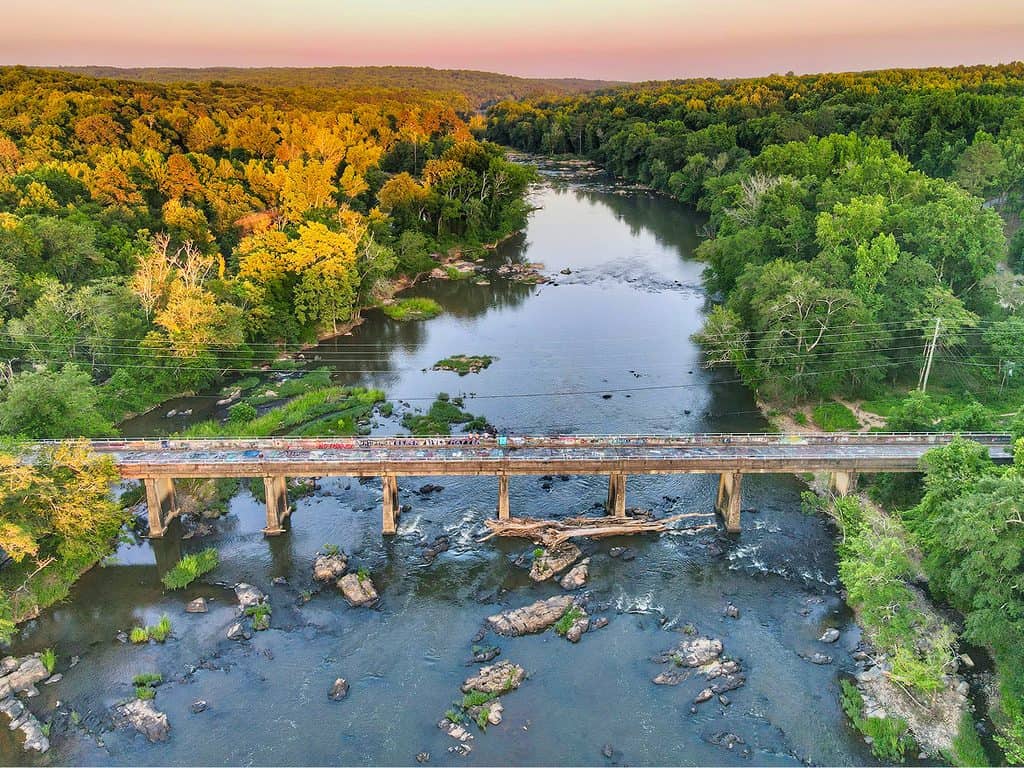
Central Pines works with local governments and regional partners to understand where communities, infrastructure and natural systems are vulnerable and to identify strategies that can reduce risk over time. The work may connect hazard mitigation, climate adaptation, infrastructure planning, natural-resource protection and community investment.
Regional Resilience Projects
Central Pines has helped complete two major regional resilience assessments covering different parts of the region. Together, they provide a foundation for understanding vulnerability and moving from analysis toward implementable projects.
CPRC Projects
Triangle Regional Resilience Partnership
The Triangle Regional Resilience Partnership assessed shared vulnerabilities to extreme weather, heat, drought and changing demands on regional resources in Durham, Orange and Wake counties. The work identified vulnerable assets and provided strategies communities could use in their own planning.
RISE Regional Resilience Portfolio
Through North Carolina’s RISE program, Central Pines and its partners assessed risks across Chatham, Johnston, Lee and Moore counties and developed a portfolio of projects designed to strengthen regional resilience. The process moved beyond identifying vulnerabilities by defining priority projects and practical implementation pathways.
From Assessment to Implementation
Resilience planning is most useful when communities can turn findings into action.
Central Pines helps connect regional analysis with project development, partnerships, technical expertise and potential funding opportunities. That allows resilience assessments to become starting points for investments rather than reports that sit on a shelf.
Frequently Asked Questions
What is the difference between emergency management and resilience?
What is the difference between emergency management and resilience?
Emergency management focuses on preparing for, responding to and recovering from disruptive events. Resilience planning looks more broadly at how communities can reduce risk, adapt to changing conditions and strengthen systems before future disruptions occur.
The two are closely connected: decisions made during planning and recovery can make communities better prepared for what comes next.
Does Central Pines provide emergency response services?
Does Central Pines provide emergency response services?
No. Immediate emergency response is handled by local and county emergency management agencies, first responders and state or federal partners as appropriate.
Central Pines supports communities through regional coordination, planning, technical assistance and longer-term recovery and resilience work.
What is FEMA Public Assistance?
What is FEMA Public Assistance?
FEMA Public Assistance is a federal program that can reimburse eligible governments and certain organizations for qualifying costs associated with disaster response and recovery after a federal disaster declaration.
Using the program requires documentation, financial administration and coordination, which is why preparing local systems before a disaster can make recovery more effective. Central Pines Regional Council
What is a resilience assessment?
What is a resilience assessment?
A resilience assessment examines how hazards and other stressors may affect communities, infrastructure, natural systems and other important assets.
Regional assessments can also show where vulnerabilities cross jurisdictional boundaries and where communities may benefit from shared strategies or projects.
What is the RISE program?
What is the RISE program?
Regions Innovating for Strong Economies and Environment, or RISE, is a North Carolina resilience program that paired vulnerability assessment with project development.
Central Pines participated in the program for Chatham, Johnston, Lee and Moore counties, producing a regional assessment and a portfolio of priority resilience projects.
Where should residents go during an active emergency?
Where should residents go during an active emergency?
For immediate emergencies, call 911 and follow instructions from local emergency management agencies and public-safety officials.
Residents looking for preparedness information can also use resources from ReadyNC, North Carolina Emergency Management and the National Weather Service.
Resources & Guides
-
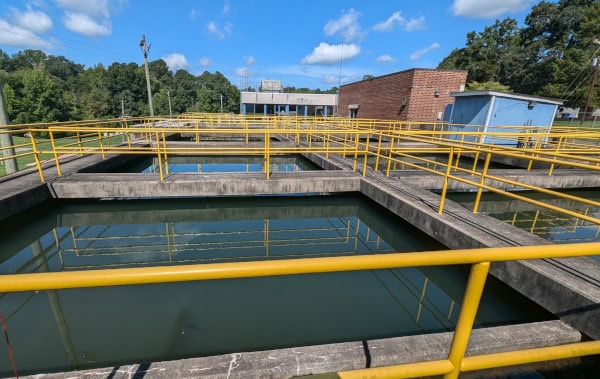
Planning Together for a Secure Regional Water Supply
The Triangle Water Supply Partnership brings local governments and water systems together to plan for reliable, sustainable water supplies across a fast-growing region.
-
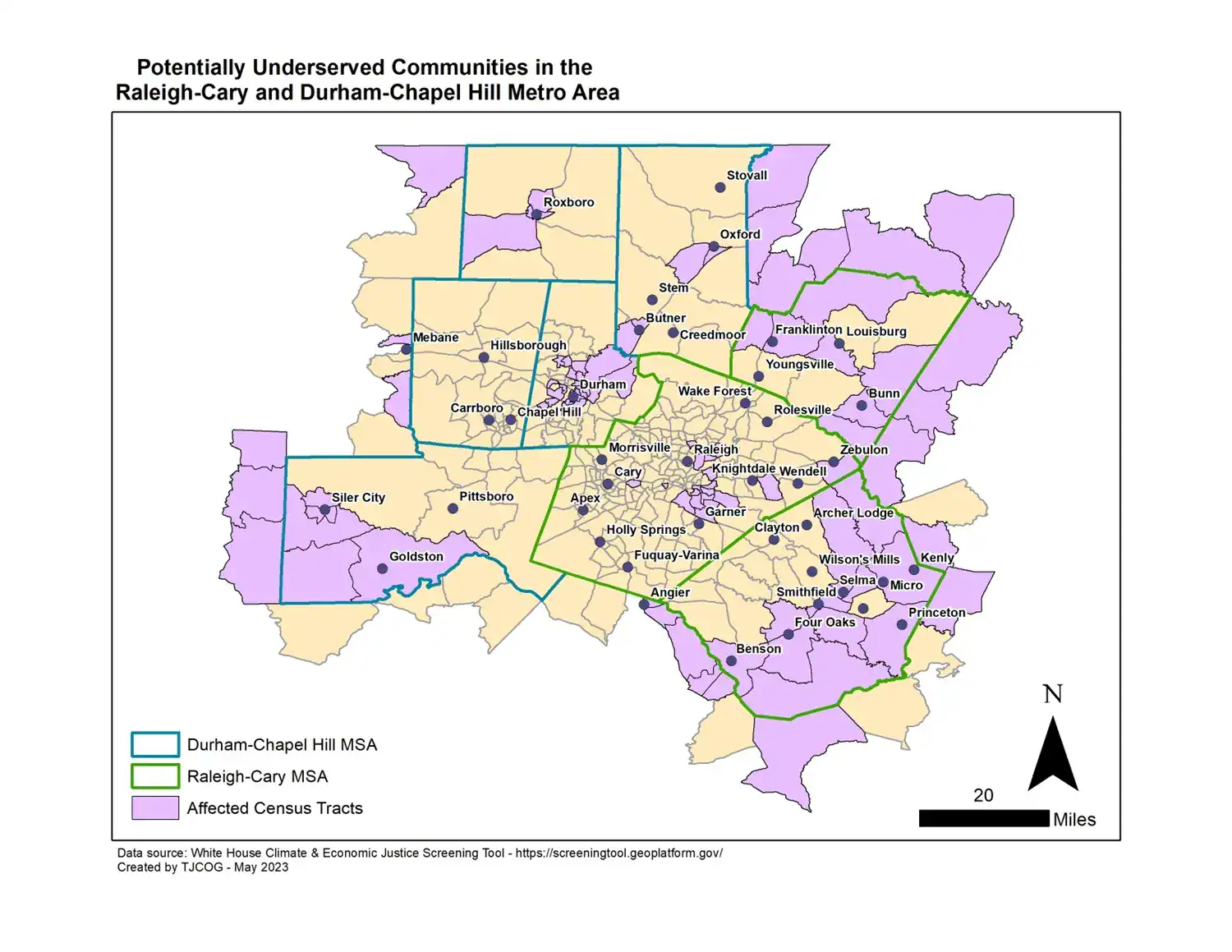
Understanding Environmental Justice in the Triangle
Explore regional research that helps local governments understand where environmental burdens and community vulnerability overlap across the Central Pines region.
-
Building a Regional Climate Action Plan
Central Pines is coordinating an eight-county climate-planning effort to identify practical strategies for reducing greenhouse-gas emissions and supporting long-term regional action.
-
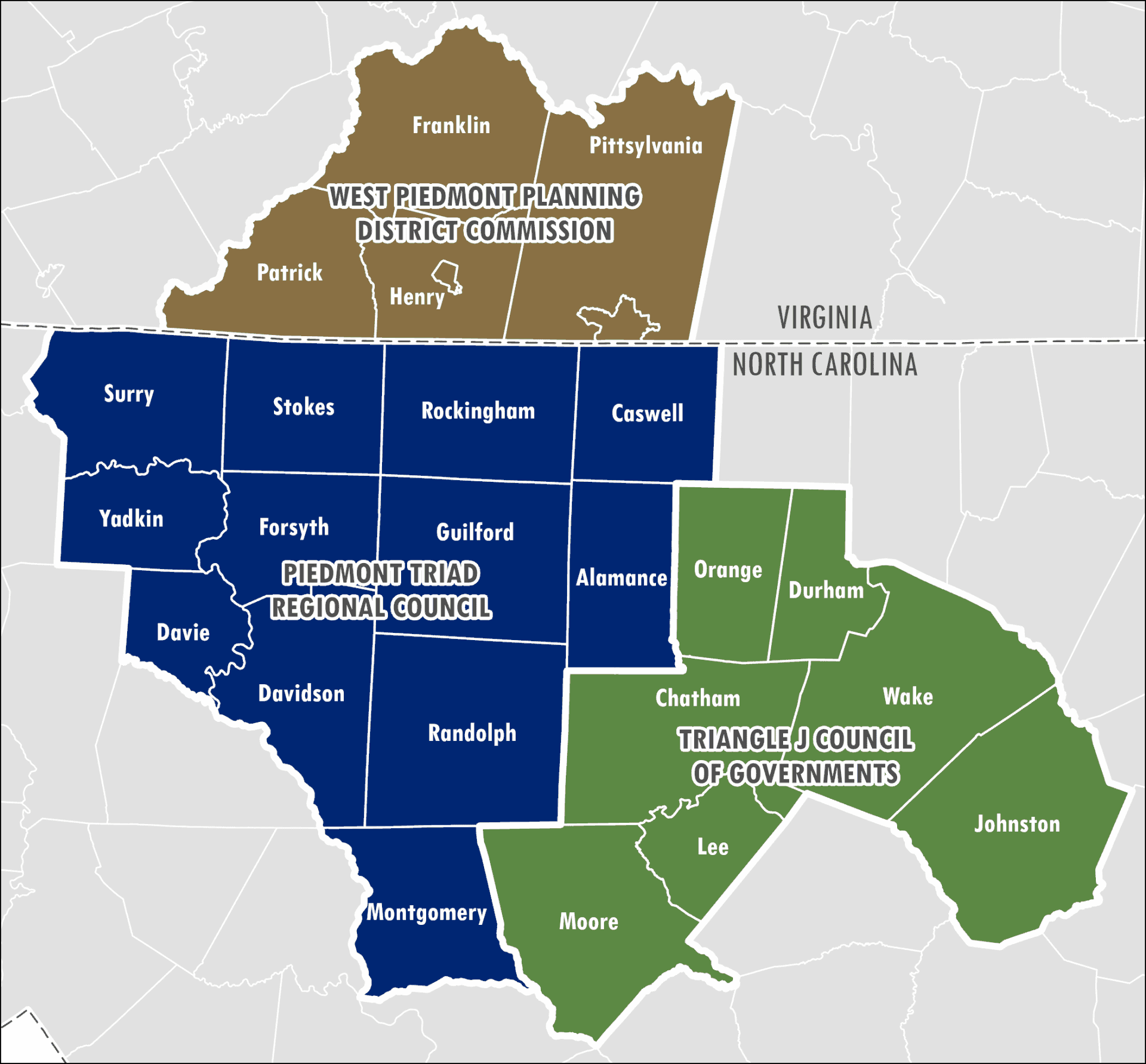
Financing Brownfield Cleanup Across the Piedmont Triangle
Explore loans and subgrants that can help eligible communities, organizations and businesses overcome the cost of cleaning up brownfield properties.
-
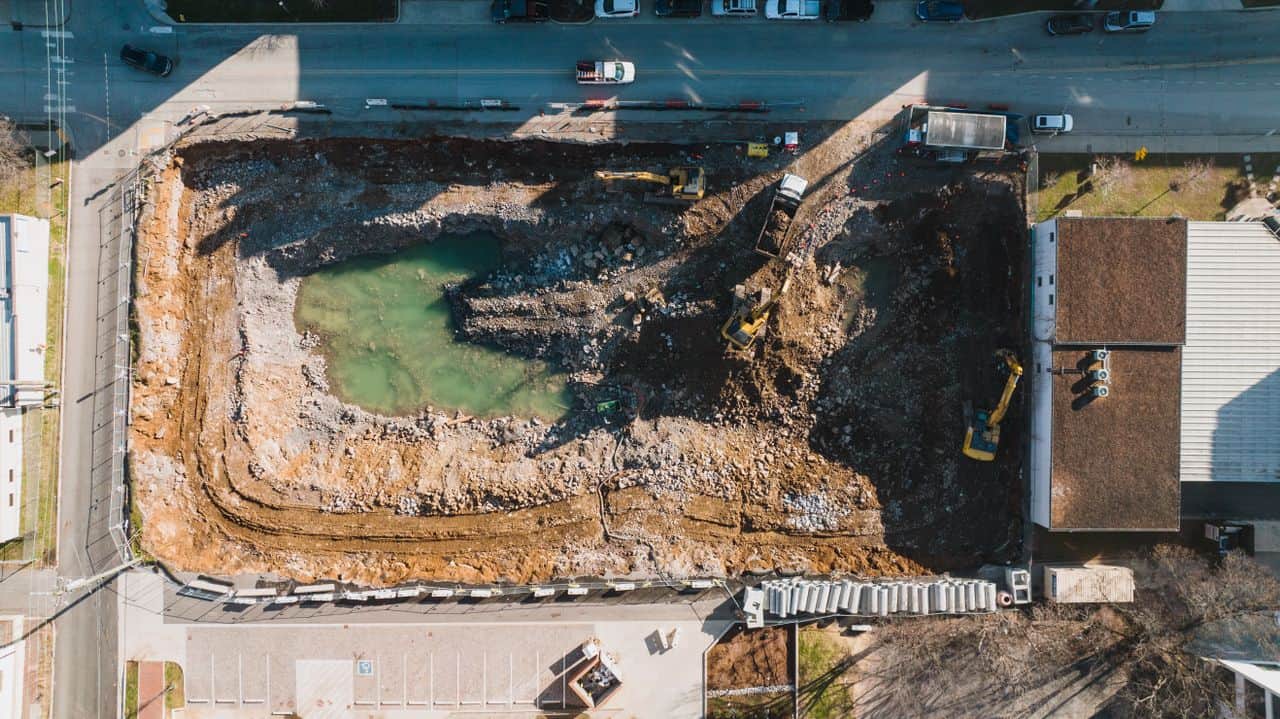
Turning Brownfield Sites Into Community Opportunities
Learn how Central Pines helps communities identify, assess and plan for brownfield properties so underused sites can move toward cleanup, reinvestment and productive reuse.
-
Connecting Local Priorities to Regional Investment
Central Pines connects local governments with regional economic strategy, data, technical assistance and federal economic-development resources through its role as the region’s Economic Development District.
-
Counts, Estimates and Projections — A Primer from NC’s State Demographer
Population counts, estimates, and projections each serve a different purpose. Karyl Fuller’s primer explains when local governments should use U.S. Census counts, North Carolina’s official population estimates, and the State Demographer’s projections.
-
Growth & Planning in the Central Pines Region
This power point is an overview of the history of transportation planning in the Central Pines Region. See how the region has changed and grown over the last century and projections for future growth. This presentation was given at the 2024 Regional Day for newly elected officials. View Power Point…
-
Planning for Resilience Across Chatham, Johnston, Lee and Moore Counties
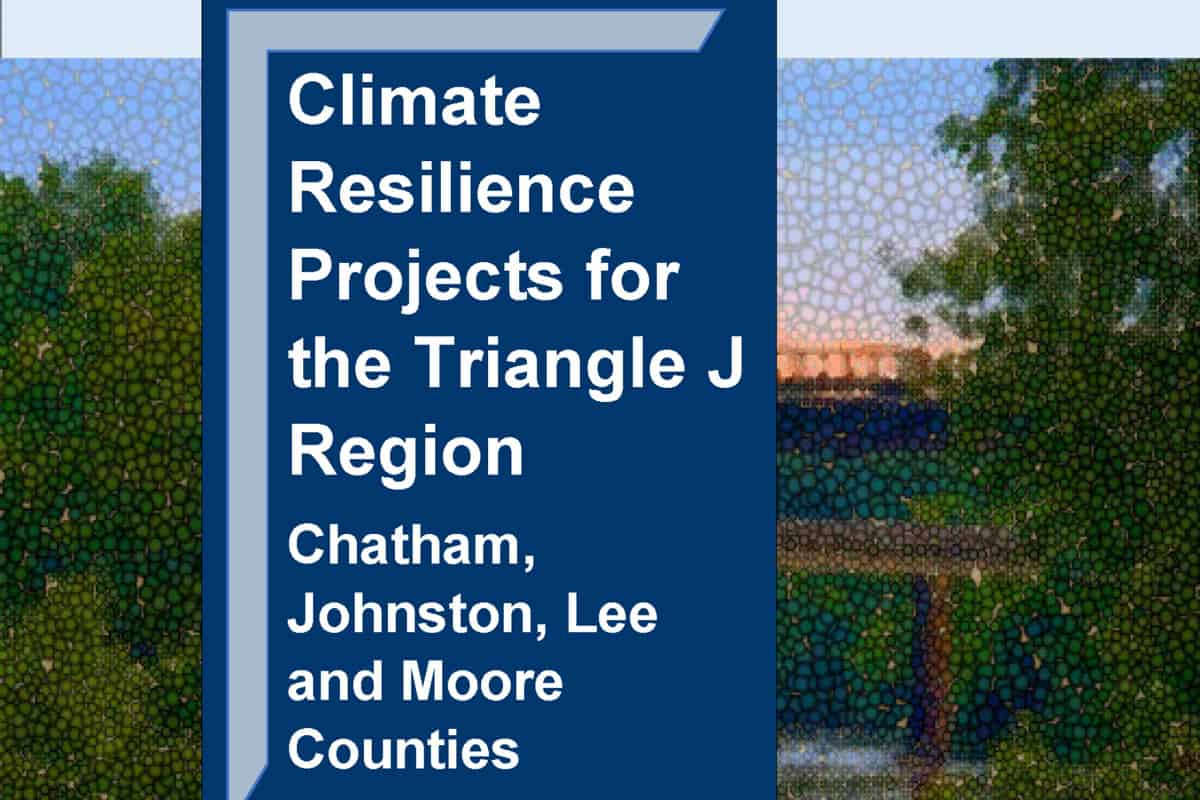
A regional vulnerability assessment and project portfolio identify practical actions for reducing climate and natural-hazard risks across Chatham, Johnston, Lee and Moore counties.
-
Planning for Last Mile Initiatives
There is not a “one size fits all” model for implementation of micromobility and microtransit initiatives. Each of our local government members have special needs and face complex challenges. However, micromobility and microtransit modes are rapidly expanding to help cover “the last mile” and provide an option to communities who…
-
Siler City Land Development Plan
The purpose of this Siler City Land Development Plan (2017) is to provide a vision for the future growth and development of the Town of Siler City, and to help execute that vision through adopted goals and policies. As a guide, the plan is designed to assist public officials, citizens,…
Connect With Our Team
Connect with the Central Pines team for questions about resilience planning, regional assessments and emergency-management technical assistance.
-

Abby Manning
Planner II
-

Christopher Lawson
Program Manager
-

Grace Lower
Water Resources Intern
-

Karyl Fuller
Program Manager
-

Lindsay Whitson
Community & Economic Development Director
-

Marcy Waters
Planner II – Resilience Planner
-

Shuchi Gupta
Principal Planner
Related Services & Programs
-
Community Development
Help communities strengthen local economies, reinvest in places and expand opportunity through regional economic development, brownfields, trade, digital access and project support.
-

Environmental Protection
Regional planning, technical assistance and collaborative programs that help communities protect natural resources, improve water quality and prepare for changing environmental conditions.