Triangle Clean Cities helps fleets, local governments, businesses and community partners put cleaner transportation technologies into practice.
The coalition was founded in 1999 and designated by the U.S. Department of Energy in 2001. Since then, Triangle Clean Cities has worked independently and with Clean Cities coalitions across North Carolina and the country to advance alternative fuels, energy-efficient mobility systems and fuel-saving technologies.
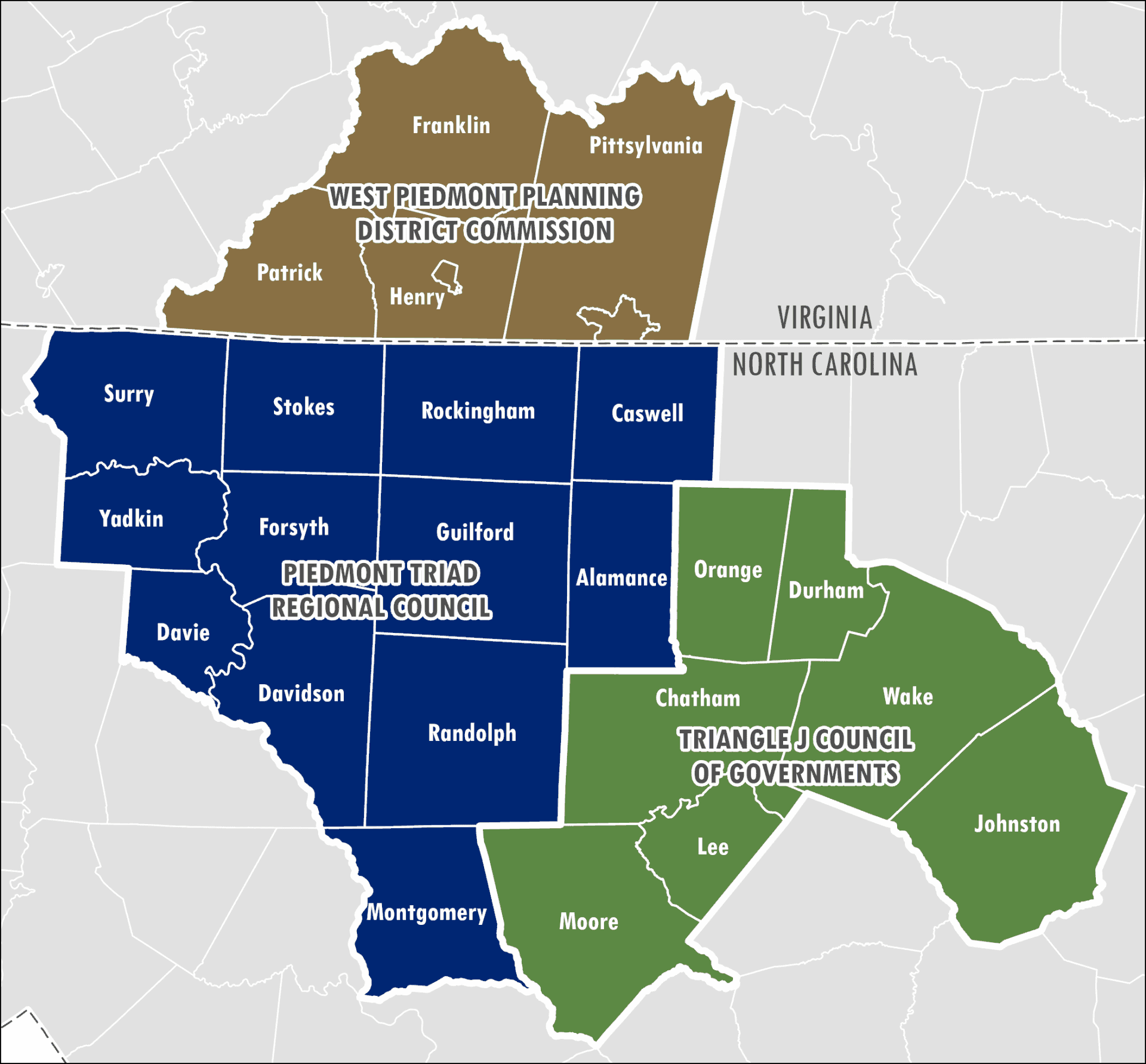
Triangle Clean Cities is a program of Central Pines Regional Council. Staff support coalition members through grant assistance, technical assistance and networking opportunities that can help organizations understand technologies, identify funding and learn from other fleets and communities.
Current & Recent Initiatives
Triangle Clean Cities participates in regional and national projects designed to test new technologies, improve infrastructure and expand access to cleaner transportation.
TEST Real-World Charging (Ongoing)
TEST Real-World Charging (Ongoing)
Triangle Clean Cities leads the Team-based Evaluation, Surveying, and Training for Real-World Charging (TEST) program, a multi-year effort focused on improving the reliability, accessibility and effectiveness of electric-vehicle charging infrastructure.
The project brings together Triangle Clean Cities, national laboratories, the Joint Office of Energy and Transportation, East Tennessee Clean Fuels and Clean Cities coalitions across more than 20 states.
The program focuses on:
- Developing consistent approaches for evaluating charging stations
- Training participants to test equipment and troubleshoot problems
- Building workforce skills related to EV charging
- Collecting real-world charging performance data
- Creating a model that other states and coalitions can replicate
The project is planned as a three-year effort moving from standards and testing tools into field training, data collection and broader replication.
Southeast Alternative Fuel Corridors
Southeast Alternative Fuel Corridors
The Southeast Region Alternative Fuel Corridor interactive map shows locations of refill and charge stations for various alternative fuel types in the Southeast. These alternative fuels include liquefied petroleum gas (LPG), liquefied natural gas (LNG), compressed natural gas (CNG), and electric (EV). Using corridor-ready criteria established by the Federal Highway Administration, drive-distance zones were created to identify gaps in station infrastructure along interstate corridors. These buffer drive-distance zones were calculated only for stations within 5 miles of an exit along interstate corridors in the Southeast region. New stations can therefore be considered for installation in areas of the corridor network not overlapped the drive-distance zones.
The work uses Federal Highway Administration corridor criteria to identify existing stations and potential gaps in fueling and charging infrastructure.
DRIVE Electric USA
DRIVE Electric USA
DRIVE Electric USA brought together Clean Cities coalitions and transportation partners in 14 states to reduce barriers to plug-in electric vehicle adoption.
Triangle Clean Cities led North Carolina’s participation and worked with Plug-in NC and other partners on consumer education, utility and regulator engagement, dealership outreach, fleet engagement, charging-infrastructure planning and local EV programs.
The national project ran from October 2020 through December 2023.
Clean Energy to Communities — Durham
Clean Energy to Communities — Durham
Triangle Clean Cities partnered with the City of Durham through the U.S. Department of Energy’s Clean Energy to Communities (C2C) program to increase awareness of electric mobility and improve access to information about EV costs, charging and workforce opportunities.
The project included community outreach, bilingual materials and two Ride and Drive events in spring 2025. Feedback from those events informed Durham’s electrification planning and future infrastructure work.
Explore Cleaner Fuels & Vehicle Technologies
Triangle Clean Cities works across multiple fuels and technologies rather than promoting one solution for every fleet. The right option depends on vehicle use, infrastructure, cost, operating needs and local goals.
Biodiesel
Biodiesel
Biodiesel is a renewable, biodegradable fuel produced from feedstocks such as vegetable oils, used cooking oil and animal fats. It can be used on its own or blended with petroleum diesel, with B20 among the most common blends.
Useful resources
The Southeastern Team Reducing the Impacts of Diesel Emissions (STRIDE) Collaborative is part of EPA’s National Clean Diesel Campaign, a program combining regulatory measures with voluntary initiatives to reduce the pollution emitted from diesel engines across the country. It includes leaders from industry, academia, and government at all levels from Alabama, Florida, Georgia, Kentucky, Mississippi, North Carolina, South Carolina, and Tennessee. The collaborative was formed in April of 2006 and was originally called the Southeast Diesel Collaborative (SEDC).
Electric Vehicles
Electric Vehicles
Electric vehicles use batteries and electric motors for some or all vehicle propulsion. Options include hybrids, plug-in hybrids and fully electric vehicles, with applications ranging from passenger vehicles to service vans, buses and heavier fleet vehicles.
Useful resources
Ethanol
Ethanol
Ethanol is a renewable fuel produced from biomass and commonly blended with gasoline. Lower-percentage blends can be used broadly, while higher blends such as E85 require compatible flex-fuel vehicles.
Useful resources
Hydrogen Fuel Cells
Hydrogen Fuel Cells
Hydrogen can be used in fuel-cell vehicles and other transportation applications. While the market remains limited in North Carolina, it continues to be an area of transportation research and infrastructure development.
Useful resources
OneH2 delivers hydrogen fuel that’s ready for “immediate use” – already converted to high-pressure gaseous fuel that takes only minutes to dispense. Their system monitors your daily fuel usage through web-based telemetrics to alert them when to schedule the next fuel delivery and trailer swap-out. With OneH2, you only pay for what you use.
Natural Gas
Natural Gas
Compressed natural gas (CNG) and liquefied natural gas (LNG) can support fleet applications including buses, trucks and other medium- and heavy-duty vehicles.
Useful resources
NGV America represents more than 200 companies, environmental groups, and government organizations interested in the promotion and use of natural gas and biomethane as transportation fuels. Their member companies are those that produce, distribute, and market natural gas and biomethane across the country; manufacture and service natural gas vehicles, engines, and equipment; and operate fleets powered by clean-burning gaseous fuels.
Propane
Propane
Propane, also called liquefied petroleum gas or LPG, is used in light- and heavy-duty fleet applications including buses, vans, trucks and other vehicles.
Useful resources
Alliance AutoGas, founded in 2009 to promote autogas as the leading alternative fuel for fleet vehicles, has experienced a steady growth that continues today. Alliance AutoGas is an international network of more than 120 independent propane and autogas companies that provide a comprehensive autogas solution to medium and heavy-duty fleets. Alliance’s partners are aligned to provide propane and autogas for fleet vehicles throughout North America. This group of partners is also engaged in offering EPA certified small engines systems through our small engines division, Alliance Small Engines.
The North Carolina Propane Gas Association was founded in 1957 in order to promote, protect, and encourage the growth of the LP-Gas industry in the State of North Carolina. For the past 56 years this non-profit association has been working to protect the interest of our industry, our members, and our consumers. Currently, in the United States, over 15 billion gallons of propane are sold and approximately 60 million customers utilize propane annually.
Tools for Fleets & Transportation Decision-Makers
The U.S. Department of Energy’s Alternative Fuels Data Center (AFDC) provides current information, calculators, maps and decision-making tools related to alternative fuels, vehicles and transportation technologies.
Funding & Grant Resources
Funding & Grant Resources
Useful resources
Search current federal opportunities through Grants.gov.
The North Carolina Clean Energy Technology Center administers CFAT funding for eligible transportation projects that reduce emissions in designated North Carolina counties.
EPA funding for projects that reduce emissions from existing diesel engines and equipment. EPA currently has a 2026 national funding round underway.
Federal & State Incentives
(Expired: 09/30/2025) A tax credit is available for the purchase of a new qualified PEV that draws propulsion using a traction battery that has at least five kilowatt-hours (kWh) of capacity, uses an external source of energy to recharge the battery, has a gross vehicle weight rating of up to 14,000 pounds, and meets specified emission standards. The minimum credit amount is $2,500, and the credit may be up to $7,500, based on each vehicle’s traction battery capacity and the gross vehicle weight rating. The credit will begin to be phased out for each manufacturer in the second quarter following the calendar quarter in which a minimum of 200,000 qualified PEVs have been sold by that manufacturer for use in the United States. This tax credit applies to vehicles acquired after December 31, 2009.
Alternative fuels used in a manner that the Internal Revenue Service (IRS) deems as nontaxable are exempt from federal fuel taxes. Common nontaxable uses in a motor vehicle are: on a farm for farming purposes; in certain intercity and local buses; in a school bus; for exclusive use by a non-profit educational organization; and for exclusive use by a state, political subdivision of a state, or the District of Columbia. This exemption is not available to tax exempt entities that are not liable for excise taxes on transportation fuel.
The retail sale, use, storage, and consumption of alternative fuels is exempt from the state retail sales and use tax.
Additional Tools & Training
Additional Tools & Training
Useful resources
National Clean Cities program information and coalition network
Vehicle and infrastructure procurement resources for public fleets.
Emergency-planning tools related to alternative-fuel vehicles and fueling infrastructure.
Clean Cities news and transportation-technology coverage.
Provides an overview of autonomous vehicles including the history, safety, and future of these vehicles
Offering on-demand courses: The Electric Vehicle Supply Equipment (EVSE) Infrastructure Series is comprised of four 1-hour courses that cover the topics of siting, working with utilities, navigating permitting, and ADA considerations relating to EVSEs. The series is intended to provide foundational information on each topic for architects, planners, and construction professionals.
EV Dealership Training
A training sent to your email each week on the basics of EV’s, selling considerations. This resource is backed by the National Science Foundation and hosted by Recurrent.
A bank of videos and resources created out of California
Writings created by the North Carolina Sustainable Energy Association
Events & Training
Triangle Clean Cities has hosted and promoted conferences, webinars, fleet demonstrations and peer-learning opportunities on electric vehicles, charging, fleet operations and emerging transportation technologies.
Past Events & Webinars
Past Events & Webinars
Useful resources
The Sustainable Fleet Technology Conference & Expo brings together leading fleets and technology providers to showcase the latest and greatest transportation technologies, fuels and trends. The conference includes a strong focus on data driven decisions and tools. The expo and conference sessions are a source of on-the-ground experiences for increasing fleet efficiency and resiliency, while reducing emissions and costs.
Features Mike Rowand, Director of Technology Development for Duke Energy, on the power and planning considerations for medium- and heavy-duty operators and how utilities can help with future transportation and infrastructure planning. Then discusses how these practices are put to work. Jim Poch, transportation manager of Duke Energy South Carolina, shares current initiatives and highlight successful collaboration with case studies from various Duke Energy service territories.
Webinar on factors and issues that organizations, fleets and municipalities should consider when looking to purchase electric vehicles. You’ll hear from: Bill Eaker of the Land of Sky Clean Vehicles Coalition, who helped secure funding for multiple applicants in North Carolina’s Department of Environmental Quality VW Settlement; Chris Davis of the City of Charlotte, who will share his experience electrifying the City’s motor fleet and its criteria for assessing the electrification potential of medium- and heavy-duty vehicles; and Mark McGrew with Lion Electric, who will highlight vehicle offerings from the truck and bus manufacturer, pilot projects underway across the country and purchasing opportunities in North Carolina.
In this webinar we learned how Greensboro, NC and Dominion Energy are electrifying transportation through transit and school buses in their area. Moderated by Caitlin Rose of Triangle J. Clean Cities; guest speakers included Jacob Bolin of Plug-in NC at Advanced Energy, Kate Staples of Dominion Energy, and Jay Perkins and George Linney of the Greensboro Transit Agency.
Speakers discussed how individual travelers and our transportation landscape could potentially be impacted by emerging technologies, how communities and businesses are adapting, and what relevance an energy lens can bring to these discussions now and in a post-pandemic world.
Join PCF, Duke Energy, Renu Energy, and a local Tesla owner to learn how residential solar enables resilient and off-grid charging for your EV. Covered topics will be South Carolina’s EV landscape, Duke Energy’s EV outlook, and solar and storage basics – as well as a real world example.
The Blue Ridge EV Club hosted a Zoom panel session with women from around the area telling them what they love best about EVs and what got them into sustainable transportation.
EPA, Clean Cities and Georgia Power partnership to install power pedestals and purchase electric truck refrigerated trailers to reduce diesel consumption at idle.
Virtual Ride and Drives
Join PCF and the Tesla Owners Club of Columbia to learn about various Tesla models, how to operate and maintain them, and how charging works.
Join PCF and a local owner of a pre-owned Nissan Leaf to learn about her experience buying a pre-owned EV, how she operates and maintains it, and how she manages charging.
Palmetto Clean Fuels (PCF) and the Southern Alliance for Clean Energy (SACE) and the local electric vehicle (EV) community are offering you an opportunity to experience a Plug-in Hybrid Electric Vehicle (PHEV) through an Electric Vehicle Virtual Experience.
About Clean Cities & Communities
Triangle Clean Cities is part of the U.S. Department of Energy’s national Clean Cities and Communities network, which connects local coalitions working with fleets, fuel providers, governments, businesses and community organizations to deploy cleaner transportation technologies.
Questions About Cleaner Transportation?
Triangle Clean Cities can help organizations understand technology options, identify funding opportunities and connect with partners working on cleaner fleets and transportation systems.