Archived Program
Central Pines Safe Routes to School operations paused July 1, 2026.
-
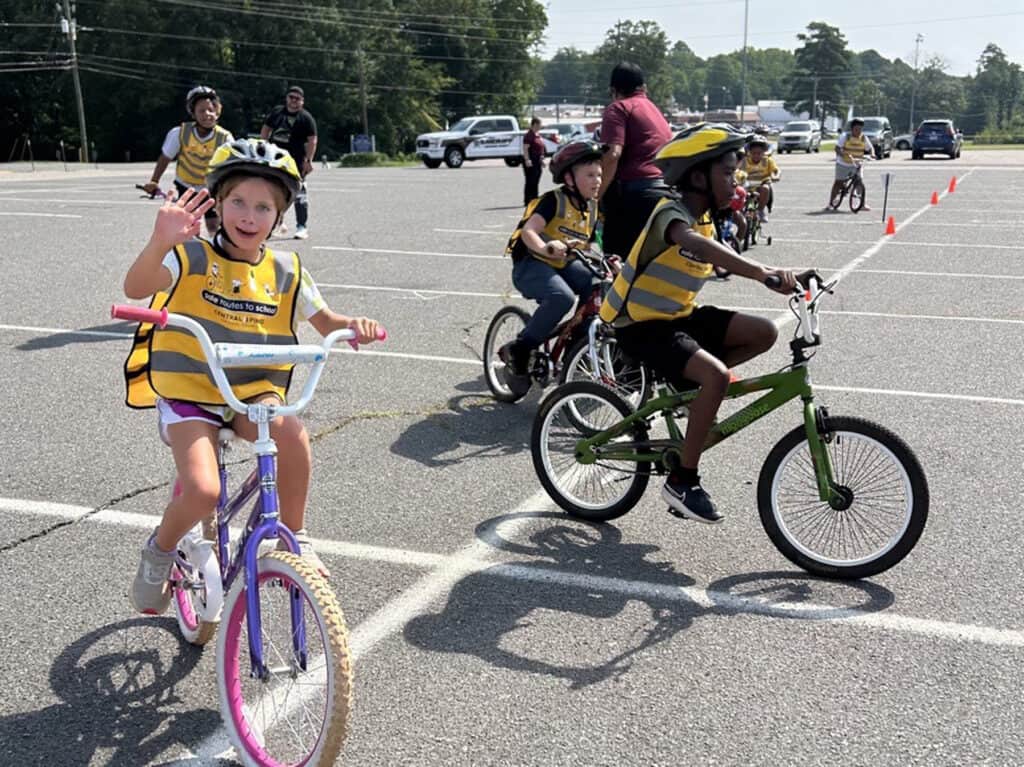 Students practice bicycle skills during a Central Pines Safe Routes to School activity.
-
-
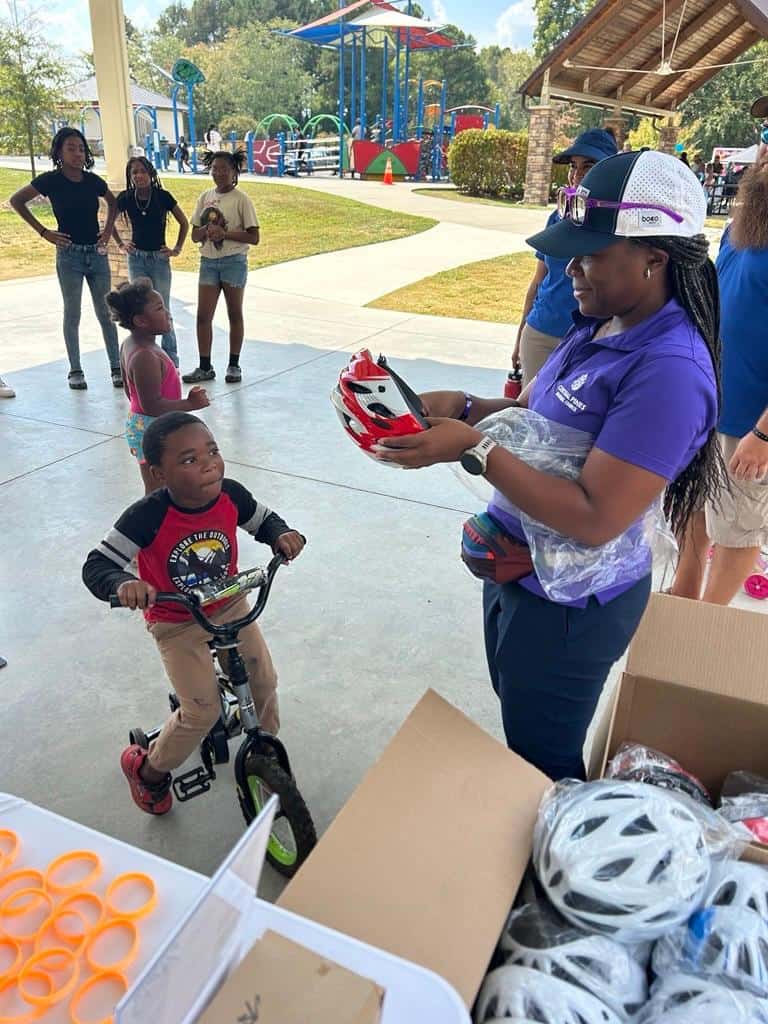 Jenisha Henneghan shares helmet-safety guidance during a Central Pines Safe Routes to School activity.
-
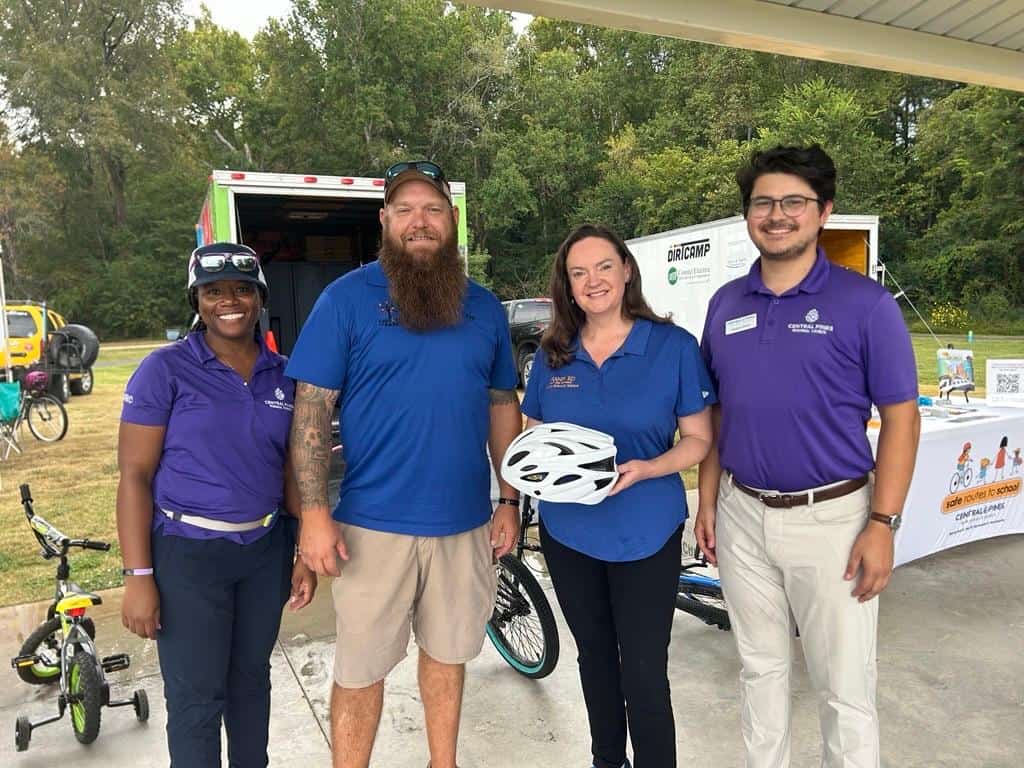 Central Pines staff and community partners at a Safe Routes to School event in Sanford.
Safe Routes to School (SRTS) is a nationwide program that encourages K–12 students to safely bike, walk and roll to school through educational campaigns, programs and activities.
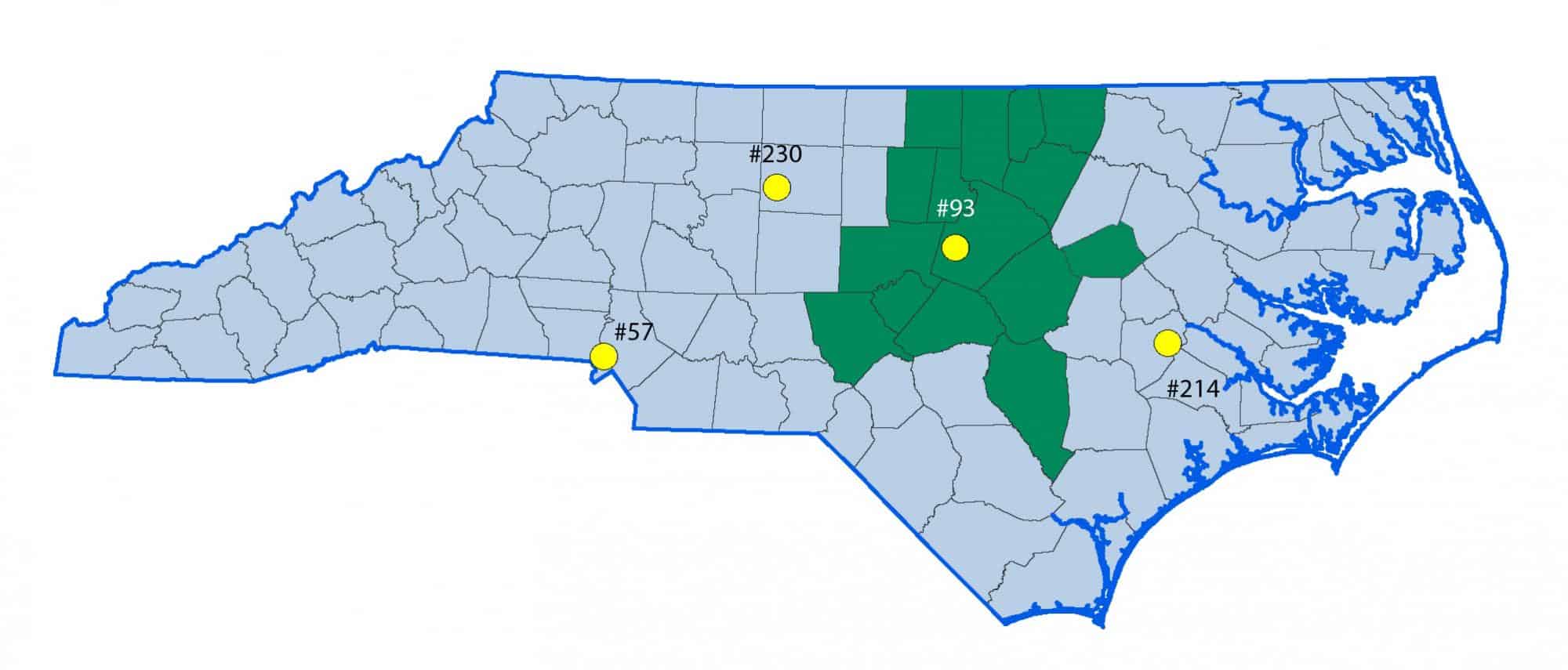
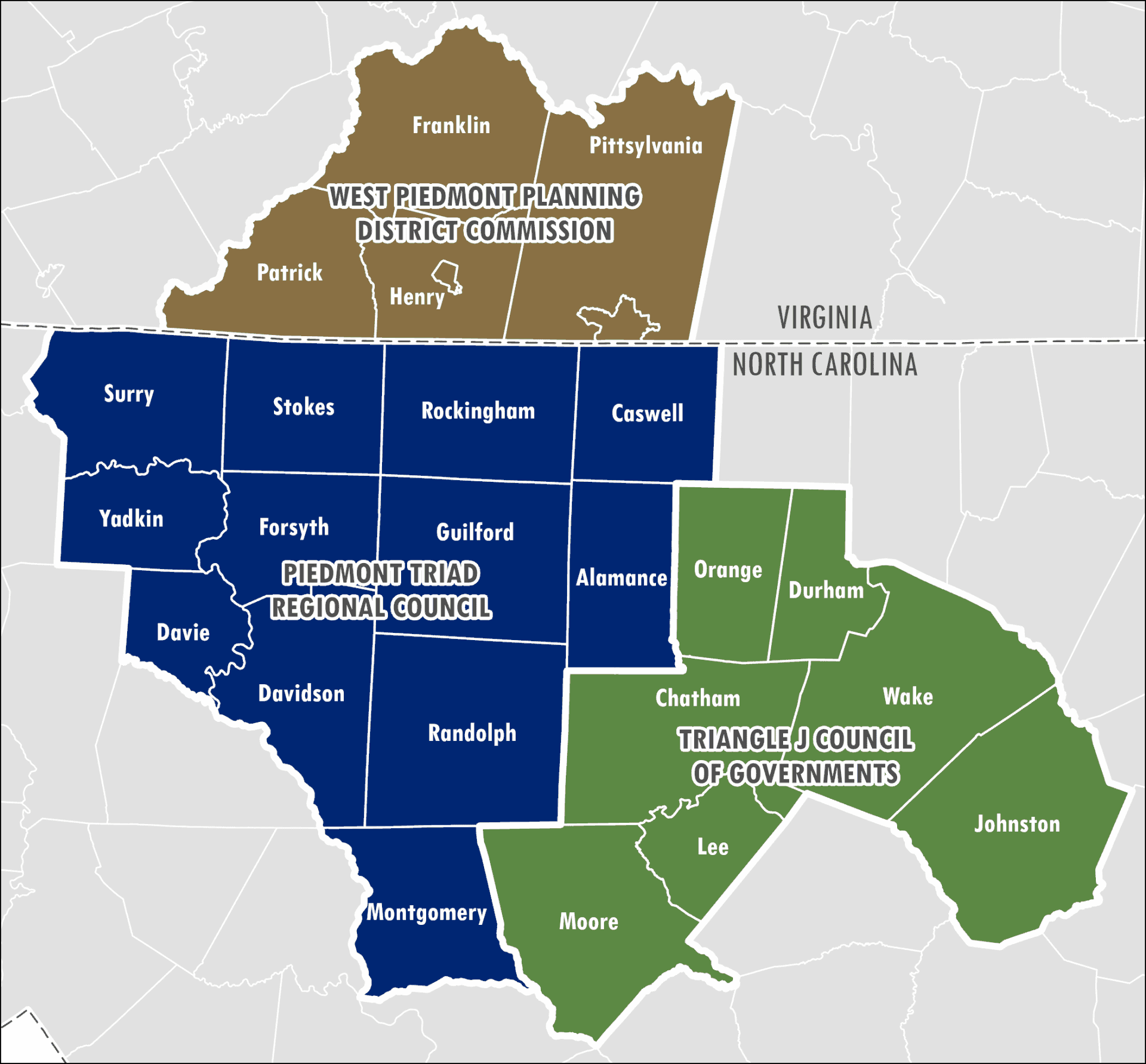
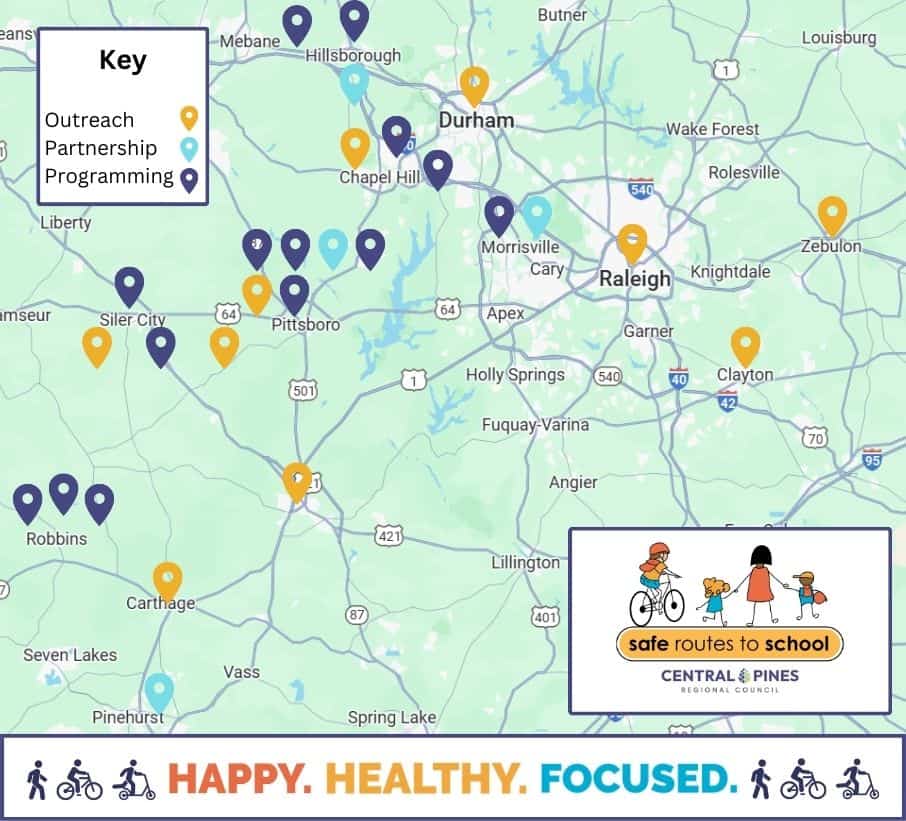
Central Pines worked with schools across its seven-county region — Durham, Chatham, Johnston, Lee, Moore, Orange and Wake counties — to deliver Safe Routes to School programming and help students build skills for safer, more active travel.
The most recent Central Pines program was supported through the North Carolina Department of Transportation’s Safe Routes to School Non-Infrastructure Program, which funds education, encouragement, enforcement and evaluation activities intended to make walking and biking to school safer and more appealing.
Program Goals
Central Pines’ Safe Routes to School work focused on three goals:
- Connect and coordinate with current and prospective partners to expand SRTS programming across the region.
- Make programs and materials more inclusive by developing options that can respond to different school and community needs.
- Deliver programs that encourage safe biking, walking and rolling in school settings.
Activities for Schools and Communities
Over the life of the program, Central Pines hosted activities including bike rodeos, classroom walking exercises, bicycle-rack art projects, traffic-garden activities and bicycle-safety programming. Staff also participated in community events and worked with other Safe Routes programs across the region.
Safe Routes to School Activity Guides
Safe Routes to School Activity Guides
English guide
Spanish guide
English guide
Spanish guide
English guide
Spanish guide
English guide
Spanish guide
English guide
Spanish guide
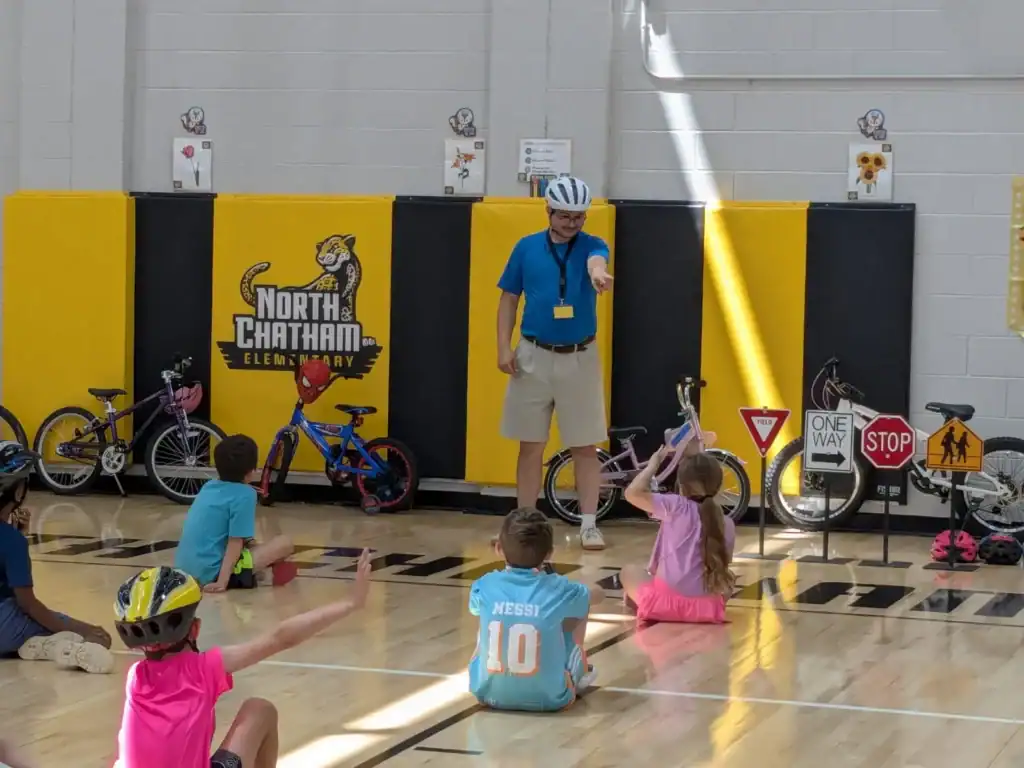 Students learn bicycle and traffic safety at a Safe Routes to School bike rodeo at North Chatham Elementary in Chatham County.
A Spring 2026 Program Highlight
During spring 2026, Central Pines brought its Bicycle Safety Week program to six elementary schools across Chatham County, introducing bicycle and helmet safety to more than 400 kindergarten students.
Participating schools included:
- Chatham Grove Elementary School
- J. S. Waters School
- North Chatham Elementary School
- Perry Harrison Elementary School
- Siler City Elementary School
- Virginia Cross Elementary School
Planning for Different Schools and Communities
Central Pines incorporated data into its Safe Routes work to better understand where schools are located in relation to existing bicycle and pedestrian infrastructure.
The program maintained an ArcGIS map showing K–12 schools throughout the grant area alongside bicycle and pedestrian infrastructure.
Regional Working Group
The Central Pines Safe Routes to School Regional Working Group brought together practitioners and stakeholders from Chatham, Durham, Johnston, Lee, Moore, Orange and Wake counties.
The group provided a place to:
- Share best practices
- Identify shared opportunities
- Coordinate Safe Routes programming across the region
While the CPRC program is now paused, the Working Group Charter remains useful as a record of how the regional collaboration was structured.
Program Partners & Collaborators
Program Partners & Collaborators
Looking for Current Safe Routes to School Information?
Although Central Pines has paused its regional program, the North Carolina Department of Transportation continues to maintain its statewide Safe Routes to School Non-Infrastructure Program and information about eligible activities and funding.