Established in 2007, the program works to reduce reliance on single-occupancy vehicles by supporting options such as transit, carpooling, vanpooling, biking, walking, teleworking and flexible work schedules. These choices can make more efficient use of existing transportation infrastructure, reduce congestion and transportation costs, improve air quality and support community health.
-
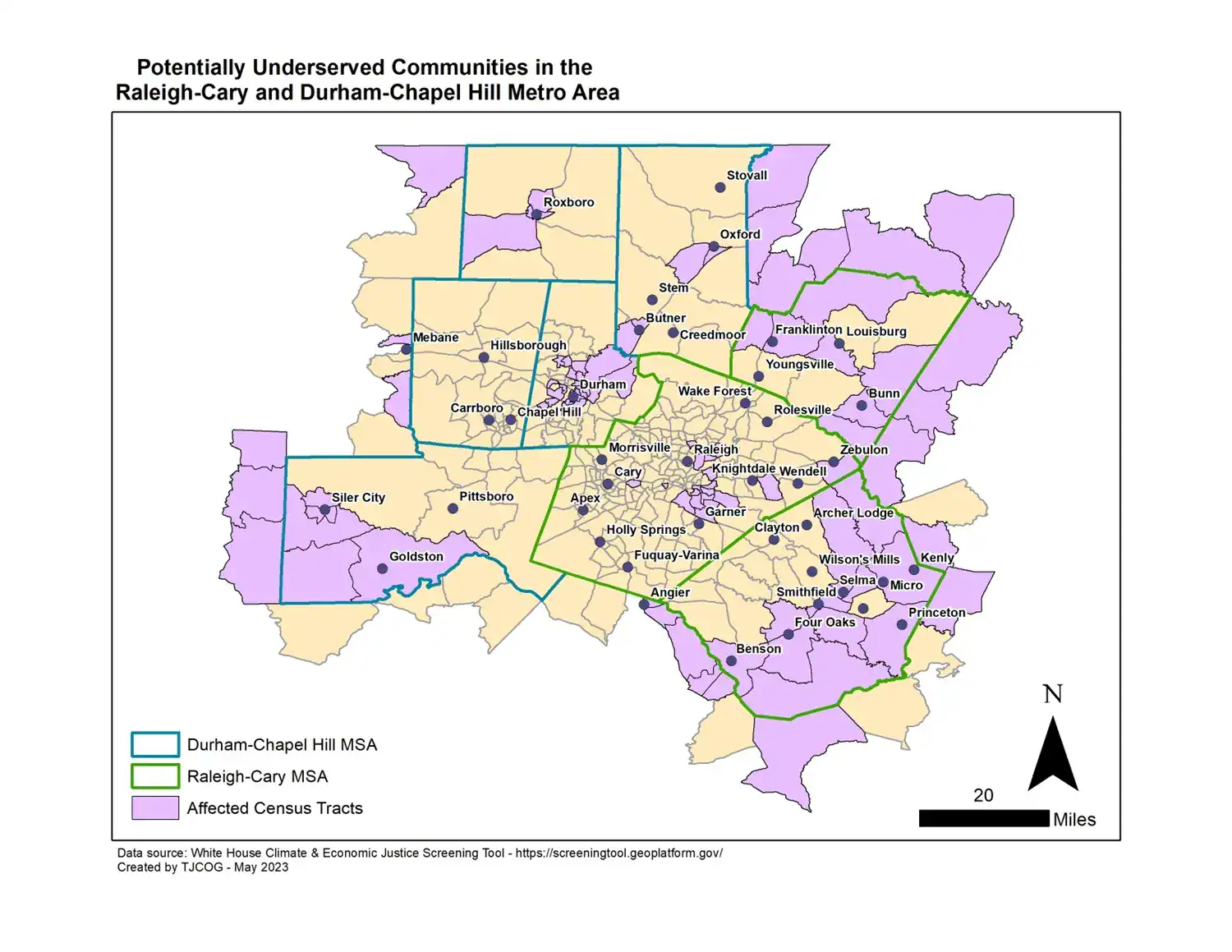
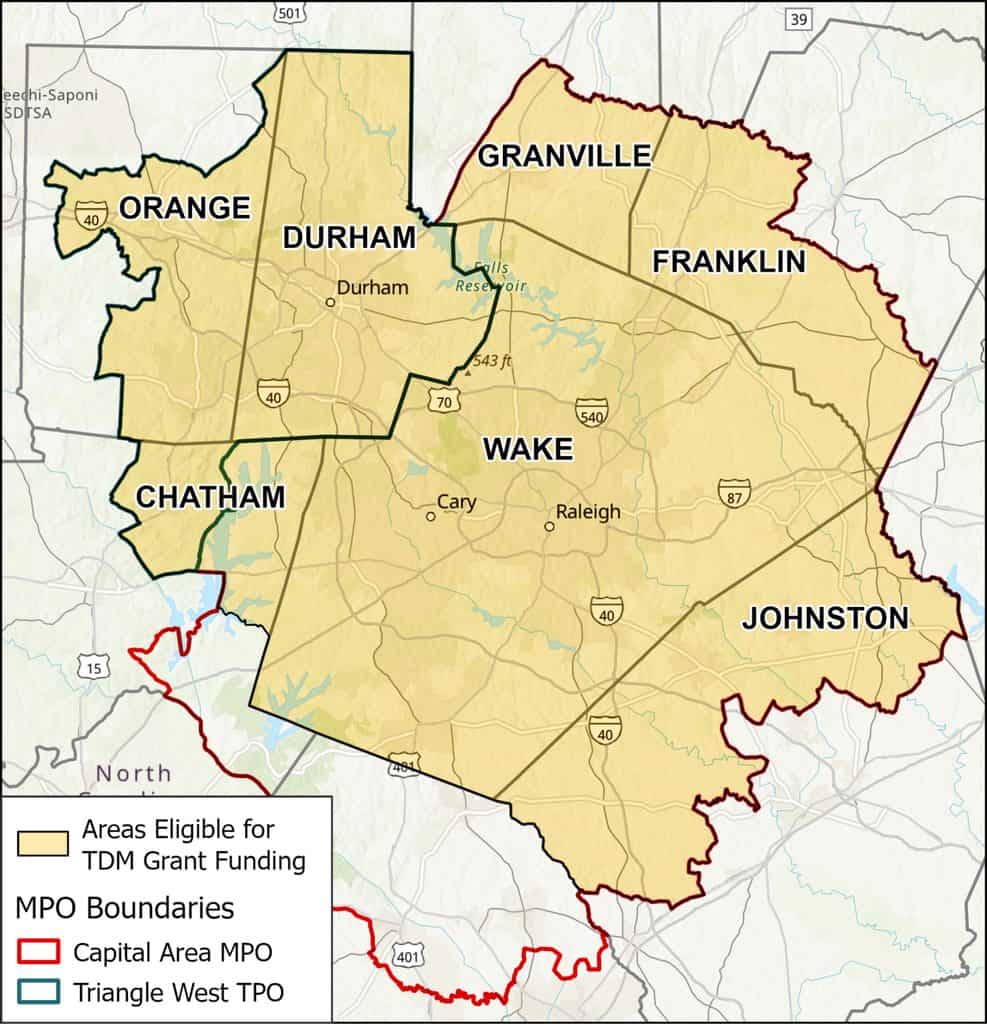 Triangle Transportation Choices’ TDM grant-funding area and MPO boundaries.
-
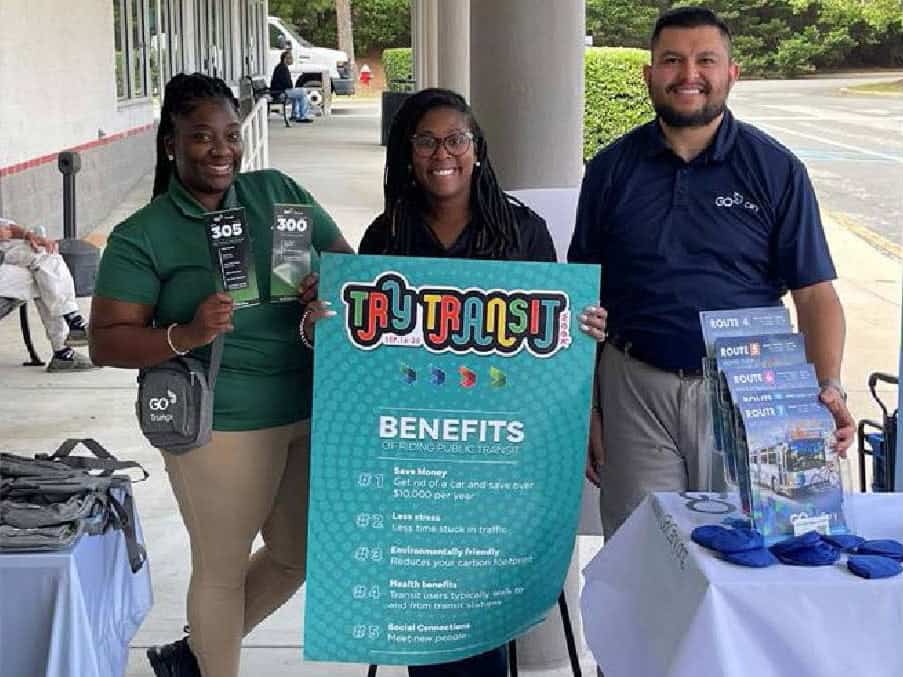 GoCary staff share transit information and resources at a community outreach event.
-
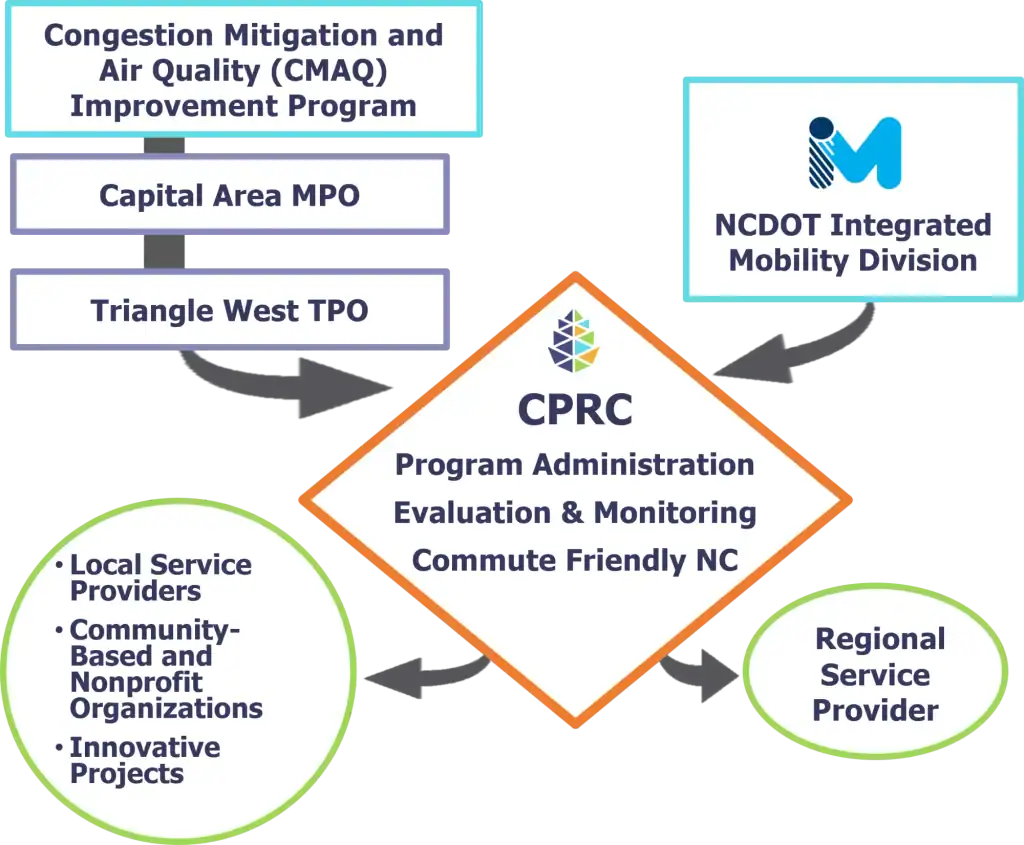
A graphic illustrating the funding and administrative structure of the Triangle Transportation Choices program. -
-
 Students arrive at Duke University aboard a Duke Transit bus, an example of the transit options promoted through Triangle Transportation Choices.
How the Program Works
Triangle Transportation Choices has historically operated as a regional grant program supporting organizations that implement TDM strategies throughout the region.
The program receives funding from three organizations:
- Capital Area Metropolitan Planning Organization (CAMPO)
- Triangle West Transportation Planning Organization (TWTPO)
- North Carolina Department of Transportation Integrated Mobility Division (NCDOT-IMD)
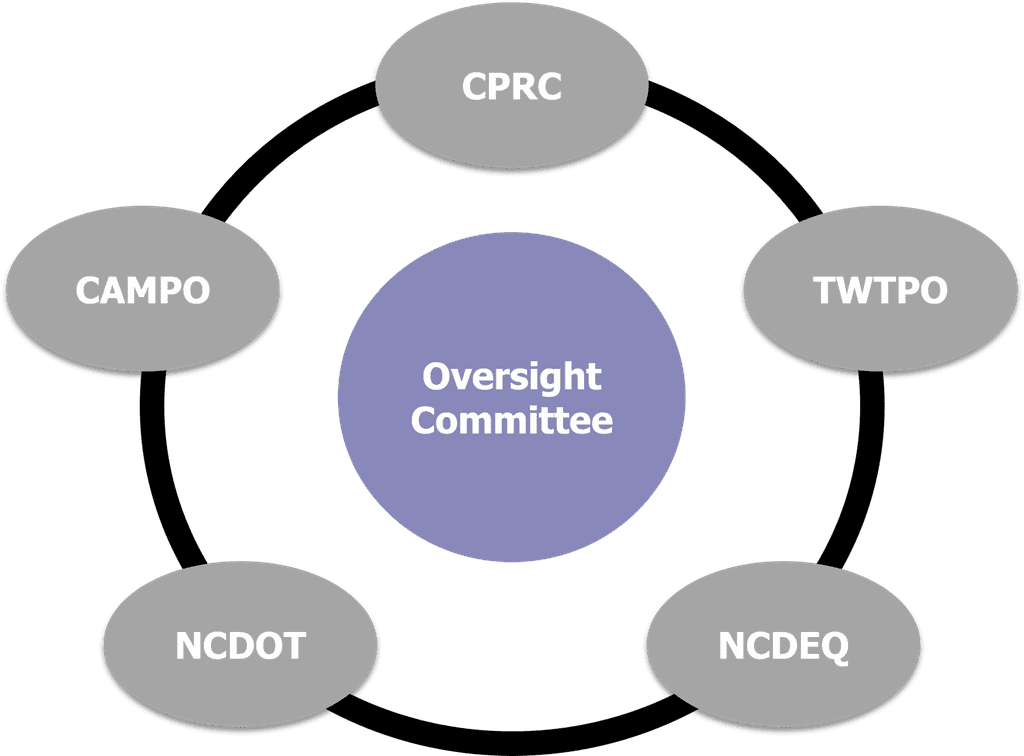
A representative from each funding organization serves as a voting member of the program’s Oversight Committee. Representatives from the North Carolina Department of Environmental Quality and Central Pines Regional Council also participate in advisory roles. The committee provides policy direction, reviews grant applications and makes final grant-award decisions.
Program Plans & Maps
Program Plans & Maps
7-Year Transportation Demand Management Plan
The program’s long-range TDM plan establishes regional goals and strategies for reducing commute vehicle miles traveled and increasing transportation choices.
Transportation Choice Hubs Employer Outreach Priority Zones Map
Explore priority areas for employer-focused transportation-choice outreach.
INVEST Neighborhoods Residential Outreach Priority Zones Map
Explore priority areas for residential transportation-choice outreach.
TDM Grant Funding Eligibility Area Map
View the geographic area eligible for Triangle Transportation Choices grant funding.
A Program That Continues to Evolve
A Program That Continues to Evolve
Triangle Transportation Choices has expanded over time to better serve regional needs and partners.
In FY23, the program piloted funding for community-based and nonprofit organizations for the first time, expanding participation beyond its traditional municipal and higher-education partners.
In FY25–26, the program introduced its first two-year funding cycle, reducing the administrative burden of annual applications and giving grantees more stability and continuity in implementing their programs.
For FY27, approximately $2.1 million was awarded to 18 agencies for TDM activities and grant administration.
Accredited TDM Organization
Accredited TDM Organization
In February 2025, Central Pines Regional Council was recognized as an Accredited TDM Organization by the Association for Commuter Transportation (ACT).
The accreditation recognizes organizations meeting industry criteria for administrative excellence, commitment to the TDM field and continuous improvement.
Impact Across the Region
Every year, Triangle Transportation Choices releases an Annual Impact Report showing the effects funded programs have on the region and its residents, from reduced vehicle travel and emissions to lower transportation costs and improved physical health.
FY25 results included:
- 5 million vehicle trips avoided
- 74 million commute miles reduced
- 3 million gallons of gasoline saved
- 25,500 alternative transportation users supported
- 54 million pounds of carbon dioxide emissions prevented
- More than $30 million in estimated societal benefits
The program’s long-range TDM plan established a goal of reducing annual growth in commute vehicle miles traveled by 25%. That target has been met or exceeded in every funding year since FY09.
FY25 Impact Reports
FY25 Impact Reports
A full review of the travel, environmental and community impacts attributed to Triangle Transportation Choices-funded programs during FY25.
A one-page overview of major FY25 outcomes, funding and program-wide vehicle-mile reductions.
Documentation of the methodology used to estimate travel and air-quality impacts from funded TDM services.
The FY25 methodology evaluates program impacts from July 1, 2024 through June 30, 2025 and documents how CPRC estimates changes in trips, VMT, emissions and fuel use.
Regional Grant Partners
Triangle Transportation Choices works through local governments, transit providers, colleges and universities, community-based organizations and nonprofits that deliver transportation programs directly to commuters and communities.
See a List of Our FY27 Partners
See a List of Our FY27 Partners
The following organizations have been awarded funding for FY27riangle Transportation Choice grant program:
Questions About Triangle Transportation Choices?
If you have questions about the program or think your organization may be a good fit, contact us.