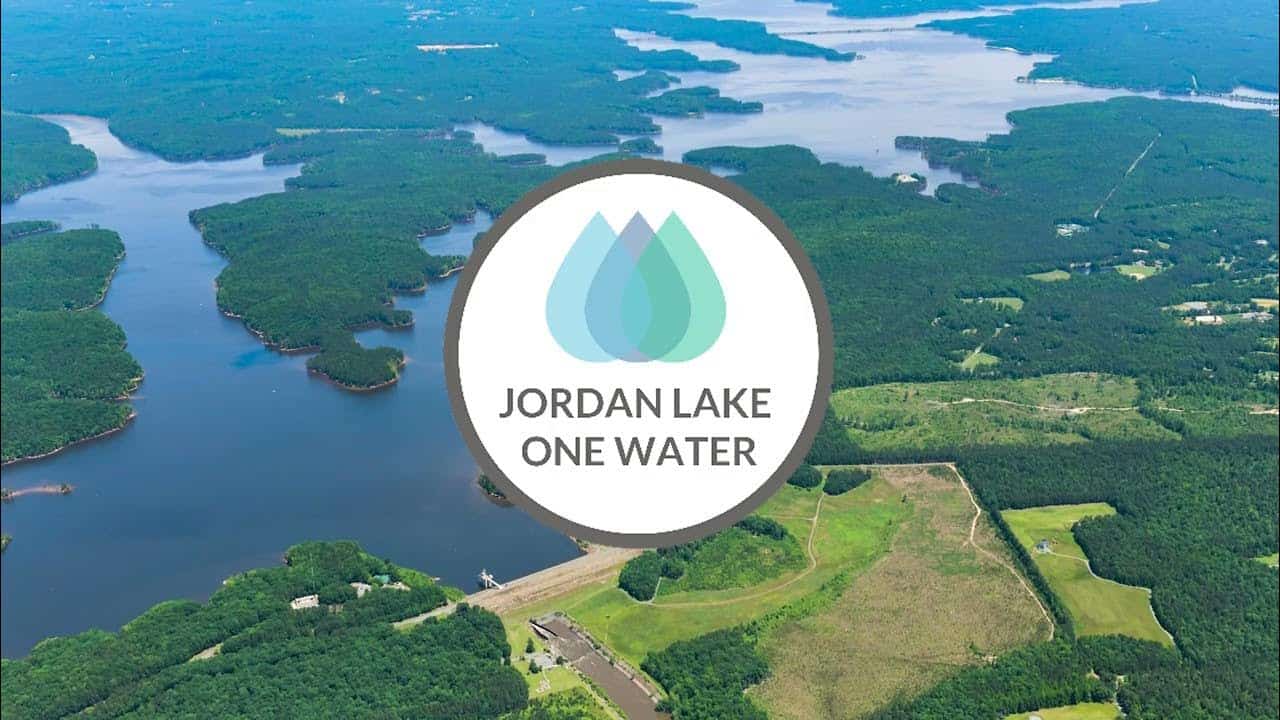
Aerial view of Jordan Lake with the Jordan Lake One Water logo.
Water does not operate in separate systems. Drinking water, wastewater, stormwater, rivers, reservoirs and groundwater are all connected, even when the agencies and jurisdictions responsible for managing them are not.
A One Water Vision for the Jordan Lake Watershed lays out a framework for managing those resources more collaboratively. The approach considers environmental, social and economic needs together and asks how communities across the watershed can make decisions that create benefits across multiple systems.
The vision was developed through the Jordan Lake One Water effort, which Central Pines helped launch to bring local governments, utilities, conservation organizations, businesses and other stakeholders together around the future of the watershed. The original report describes One Water as a systems-based approach built around the idea that all water has value.
Why One Water?
Traditional water management often separates drinking water, wastewater and stormwater into different programs. A One Water approach starts with the watershed as a whole.
That means looking for solutions that can address more than one need at the same time and considering how decisions in one community or system affect others downstream.
Think Across Systems
Consider water supply, wastewater, stormwater, land use and watershed health as connected parts of the same system.
Create Multiple Benefits
Look for investments that can improve environmental conditions while also supporting communities and the regional economy.
Work at the Watershed Scale
Coordinate across jurisdictional boundaries so local decisions contribute to shared regional goals.
Three Goals for the Jordan Lake Watershed
Three Goals for the Jordan Lake Watershed
The vision organizes the work around three interconnected outcomes.
Environmental
Improve the hydrological and ecological function of the Jordan Lake Watershed.
Societal
Enhance the health, vitality and well-being of residents and communities throughout the watershed.
Economic
Support a strong and viable regional economy while protecting the water resources on which that economy depends.
Impact: See Where Action Can Happen
Impact: See Where Action Can Happen
The report identifies six areas where communities and partners can put the One Water approach into practice.
Resilient Water Utilities
Strengthen the systems responsible for delivering, treating and managing water.
Thriving Places
Connect water management with land use, development and the quality of communities.
Competitive Business & Industry
Consider how reliable, sustainable water resources support long-term economic activity.
Robust Agriculture
Support agricultural needs while protecting water quality and watershed health.
Social & Economic Inclusion
Consider who benefits from water investments and who may bear their costs.
Water Quality & Healthy Ecosystems
Protect the rivers, streams, reservoirs and natural systems that support the entire watershed.
History: From Vision to Ongoing Partnership
History: From Vision to Ongoing Partnership
Central Pines began facilitating Jordan Lake watershed conversations in 2017. That work evolved into the Jordan Lake One Water Coalition, which became an independent North Carolina nonprofit in 2022. The coalition continues to bring public, private and community stakeholders together around integrated water-management strategies.
Explore Regional Water Planning
Learn how Central Pines works with communities and utilities on water supply, monitoring and watershed planning across the region.