
Housing
Helping communities understand housing needs, shape policy and turn local priorities into practical action.

Program Details
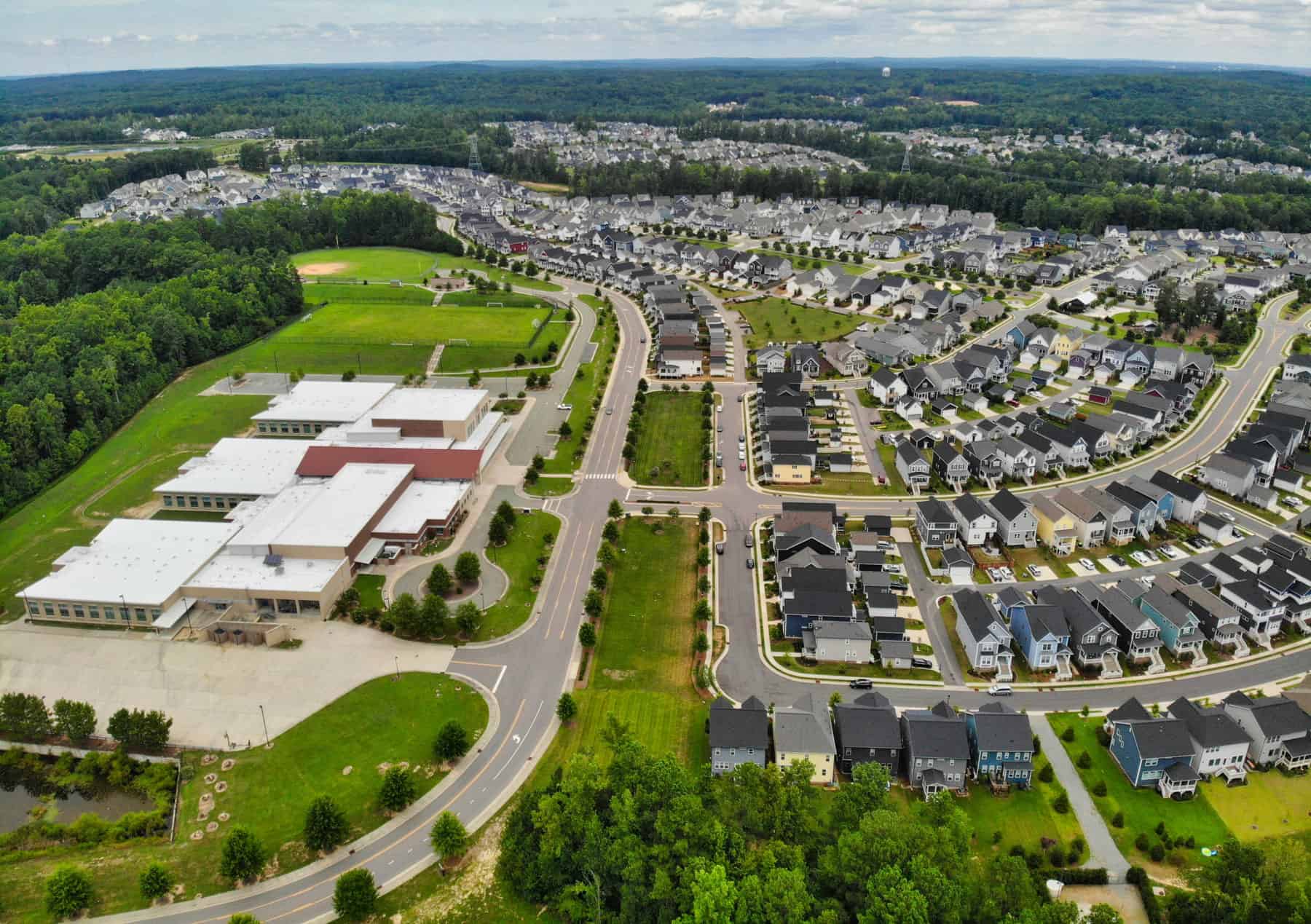
Housing needs look different from one community to the next. Some places need better data to understand affordability and supply. Others are evaluating development opportunities, updating policy, pursuing funding or building the capacity to administer a housing program.
Central Pines works with local governments, developers, nonprofit organizations and community partners at each of those stages. Our housing team provides research and data analysis, policy support, technical assistance, facilitation, grant support and program administration to help communities move from identifying a need to acting on it.
The goal is not a single regional housing solution. It is to give communities the information, capacity and regional perspective they need to make better local housing decisions.
Other Home & Housing-related Services
Services At a Glance
Explore The Details
Program Services & Information
Program Services & Information
Understand the Housing Need
Good housing decisions start with understanding what is happening locally: what housing already exists, what residents can afford, where needs are changing and where gaps may be emerging.
Housing Needs & Data
Central Pines helps communities turn housing questions into usable information. That can include a broad assessment of housing needs or a more focused inventory, research request or analysis built around a specific local challenge.
CPRC’s current Housing program identifies Housing Needs Assessments and Affordable Housing Inventories among its most common technical-assistance requests. Recent work has also included a housing inventory for the Town of Garner examining housing stock, age and identified gaps in local needs.
See Common Housing Analysis Requests
See Common Housing Analysis Requests
Housing Needs Assessments
Bring together available data and local context to identify housing needs, gaps and priorities.
Affordable Housing Inventories
Build a clearer picture of existing affordable housing resources and housing stock.
Housing Data & Research
Answer specific local questions with targeted research, data analysis and best-practice review.
Local Housing Inventories
Examine characteristics such as existing housing stock and age and identify areas that warrant additional study.
Opportunity Sites & Development Analysis
When a community wants to better understand where new housing opportunities may exist, Central Pines can help narrow the field.
Opportunity-site work can use land inventories and high-level analysis to identify properties that may merit deeper evaluation for housing development. A recent Central Pines project in Durham used this approach to identify potentially suitable properties for future housing consideration.
This type of analysis is an early planning tool. It helps communities focus further discussion and investigation rather than making a development decision on its own.
Opportunity-Site Support
Opportunity-Site Support
Land Inventories
Organize potential properties and establish a clearer starting point for further evaluation.
High-Level Site Analysis
Use available information to identify properties that may align with a community’s housing goals.
Mapping & Data Support
Bring geographic and housing information together so communities can better understand potential opportunities.
Connection to Broader Planning
Housing opportunities often intersect with land-use, transportation and infrastructure decisions.
Have a land use or development planning need?
Housing opportunities often depend on a broader understanding of land use, development patterns, infrastructure and future growth. Explore Central Pines’ Land Use & Community Planning services for help with site analysis, mapping, scenario planning and related planning needs.
Shape the Strategy
Research is most useful when it leads to decisions. Central Pines helps communities use housing information to evaluate options, develop policy and create a shared understanding of what needs to happen next.
Housing Policy & Strategy
Central Pines provides policy review and development, research, best-practice guidance and discussion facilitation around local housing challenges. CPRC also identifies building a stronger regional approach to housing affordability as an ongoing priority.
The work can begin with an existing policy that needs review, a new challenge a community is trying to address or research that raises larger questions about housing supply and affordability.
Policy & Strategy Support
Policy & Strategy Support
Policy Review & Development
Review existing approaches and help communities explore policy responses to identified housing needs.
Research & Best Practices
Provide context from housing research and approaches being used elsewhere.
Presentations & Discussion Facilitation
Help staff, elected officials, partners and other stakeholders work through housing information and choices together.
Regional Coordination
Look beyond individual jurisdictional boundaries when housing needs, market conditions or opportunities affect multiple communities.
Housing Policy Resources
Housing Policy Resources
Analyzing Potential Impact of Federal Housing Legislation
Central Pines developed this 2026 resource to help local governments understand two federal housing proposals and potential implications for housing supply, financing, regulatory approaches and programs such as Community Development Block Grants.
Fund & Deliver Housing Work
Communities also need the capacity to turn plans into funded programs. Central Pines can help with both the front end of that process and the ongoing administrative work behind it.
Housing Funding & Program Administration
Central Pines assists communities with grant writing, funding administration and contracted housing programs. In some cases, CPRC becomes the administrative partner that helps a local government manage a program over multiple years.
Current 2026–27 work includes administration of Cary’s Community Development Block Grant formula funds and the long-standing Chatham Housing Project, which helps expand local capacity for affordable-housing work. CPRC is also administering funding supporting heirs-property prevention and resolution.
Examples of Housing Program Administration
Examples of Housing Program Administration
Cary Community Development Block Grant
Central Pines administers the Town of Cary’s CDBG formula funding, providing administrative capacity for a major federal community-development funding source.
Chatham Housing Project
A long-standing partnership with Chatham County designed to expand local capacity for housing-related efforts.
Heirs’ Property Family Wealth Protection
Central Pines has received Federal Home Loan Bank funding to support heirs-property prevention and resolution, including legal assistance with deed issues, wills and education intended to protect generational wealth for lower-income families.
Regional Coordination
Look beyond individual jurisdictional boundaries when housing needs, market conditions or opportunities affect multiple communities.
Funding Support
Funding Support
Grant Research & Strategy
Identify funding approaches that align with a community’s housing priorities.
Grant Writing
Support development of competitive housing-funding applications.
Program Administration
Provide the staffing and administrative capacity needed to manage approved funds and meet program requirements.
Program Administration
Provide the staffing and administrative capacity needed to manage approved funds and meet program requirements.
Need broader grant assistance beyond housing?
Explore Central Pines’ Grant Assistance services when the funding need extends beyond the Housing program.
Housing Technical Assistance
Not every housing challenge needs a major study or new program. Sometimes a community needs targeted research, help facilitating a conversation, staff capacity for a defined project or an experienced regional partner to help determine what comes next.
Central Pines works with communities at different stages of their housing efforts and can tailor assistance around the need rather than requiring every project to follow the same model. CPRC’s current housing priorities include contracted projects, data requests, research and support for local governments, nonprofit partners and community groups.
See Common Requests
See Common Requests
- Housing needs assessments
- Policy review and development
- Opportunity-site analyses
- Affordable housing inventories
- Data and research requests
- Presentations and discussion facilitation
- Grant writing
- Funding administration
Ready to discuss a housing need?
Start with the challenge you are trying to solve. The Housing team can help determine whether the next step is data, policy work, facilitation, funding assistance or another type of technical support.
Frequently Asked Questions
Learn how Central Pines works with communities on housing research, strategy, funding and implementation.
Who is Central Pines’ Housing program designed to serve?
Who is Central Pines’ Housing program designed to serve?
This page is primarily for local governments and organizations working on community housing needs. Central Pines also collaborates with developers, nonprofits and community partners on housing initiatives.
I am a homeowner who needs repairs. Is this where I apply?
I am a homeowner who needs repairs. Is this where I apply?
Homeowner repair and accessibility assistance is organized separately under Home Repair.
Can Central Pines conduct a housing needs assessment?
Can Central Pines conduct a housing needs assessment?
Yes. Housing Needs Assessments are one of the most common types of technical assistance requested from the Housing team.
Can Central Pines help us understand our existing housing stock?
Can Central Pines help us understand our existing housing stock?
Yes. Housing inventories, research and data analysis are part of the Housing program. Recent work has included an inventory examining housing stock, age and local housing gaps.
What is an opportunity-site analysis?
What is an opportunity-site analysis?
It is an early-stage analysis that helps a community identify properties that may warrant additional evaluation for housing development. Central Pines has used land inventories and high-level analysis for this type of work.
Can Central Pines help develop or review housing policy?
Can Central Pines help develop or review housing policy?
Yes. Policy review and development are among the Housing team’s common assistance requests, along with research and facilitated discussions.
Can Central Pines help administer housing funding?
Can Central Pines help administer housing funding?
Yes. Funding administration and grant writing are established Housing services. CPRC currently administers housing-related funds and programs on behalf of local governments, including Cary’s CDBG program.
What is CDBG?
What is CDBG?
The Community Development Block Grant program is a federal HUD program that provides eligible communities with flexible funding for community-development activities. Central Pines currently administers Cary’s CDBG formula funds as part of its Housing portfolio.
Can multiple communities work with Central Pines on a regional housing issue?
Can multiple communities work with Central Pines on a regional housing issue?
Yes. Supporting a regional approach to housing affordability is one of CPRC’s stated Housing priorities, particularly when needs or opportunities extend beyond one jurisdiction.
Resources & Guides
Explore guides, program information and other resources that can help homeowners understand repair assistance, eligibility and options for maintaining a safe home.
-
Analyzing Potential Impact of Federal Housing Legislation
Explore a comparison of two federal housing proposals and what they could mean for local housing policy, CDBG funding and future opportunities across the Central Pines region.

-
Central Pines Regional Council Awarded $1.58 Million to Expand Lead-Safe Housing Across the Region
Central Pines Regional Council received a $1.58 million HUD grant to expand its Lead Safe Triangle Program. The funding will support lead hazard controls and abatement in about 45–50 owner-occupied homes, prioritizing households with children under six.
-
Expiring Low-Income Housing Tax Credits: What’s at Stake for the Central Pines Region
More than 17,000 Low-Income Housing Tax Credit units serve renters across the Central Pines region, but thousands could lose affordability protections by 2030. CPRC’s white paper examines the risks and outlines ways local governments can preserve affordable housing.
-
Affordable Housing Action Spotlight: Using Tax Credits
The federally-funded low-income housing tax credit program is a critical resource for funding affordable housing. This spotlight provides background on the program, including its benefits, best practices for local governments to incentivize the use of the tax credit, and insight into how the City of Raleigh and Wake County participate…
-
Affordable Housing Action Spotlight: Inclusionary Zoning 101
Voluntary inclusionary housing ordinances can be used by local governments to increase the stock of affordable housing. This resource provides context on inclusionary housing or zoning in North Carolina, including its tradeoffs, guidance on how to effectively use inclusionary housing programs, and insight into the Town of Chapel Hill’s program.…
-
Close to Home: An Affordable Housing Analysis of the Triangle’s Passenger Rail Corridor
This report looks at affordable housing developments–both publicly-supported and market-provided–that could be served by a passenger rail investment between West Durham and Clayton. The analysis can be used to inform decisions on economic development, land use, and affordable housing. Read Report (PDF, 4.78 MB)
-
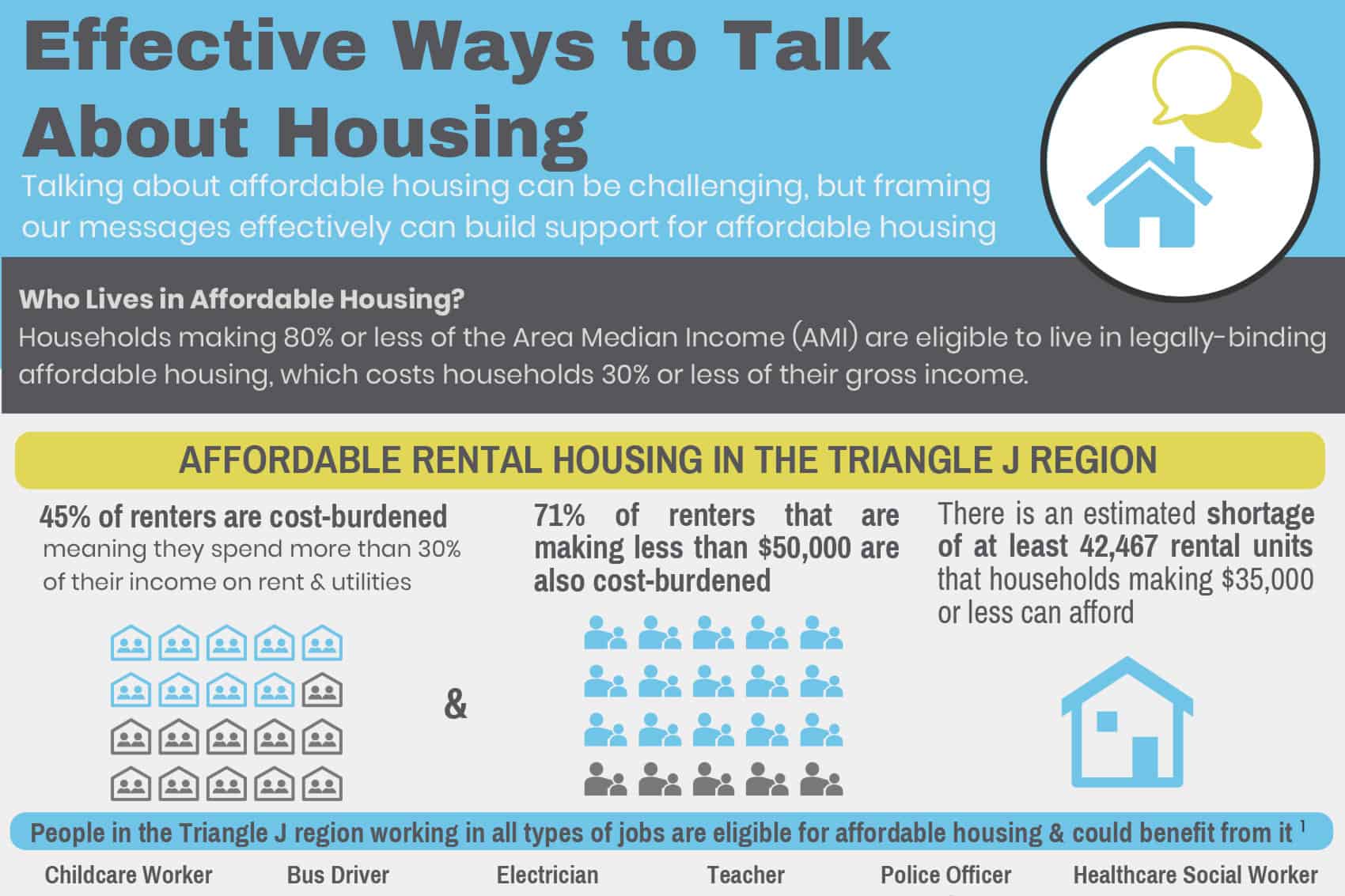
Effective Ways to Talk About Housing
Effective Ways to Talk About Housing frames affordable housing needs in the Triangle region and provides tips on how to effectively discuss affordable housing.
Connect With Our Housing Team
Have a housing question, project idea or local challenge you are trying to solve? Our Housing team can help identify the right research, technical assistance or program support.
-

Melissa Lowell
Street Outreach Coordinator
-
Lindsay Whitson
Community & Economic Development Director
-

Jillian Hall
Weatherization Program Coordinator
-

Jack Watson
Housing Planner
-

Hunter Fillers
Housing Program Manager
-

Gherian Foster
Housing Specialist
-
Abby Watson
Senior Housing Planner
Related Services & Programs
-

Transportation Planning
Coordinate long-range transportation plans, project priorities, modeling and regional partnerships across both metropolitan and rural communities.
-

Mobility
Expand transportation choices through safer streets, better commuting options, walking and biking connections, and cleaner transportation programs.
-
Land Use & Community Planning
Use land-use analysis, growth forecasting and scenario planning to help communities make informed decisions about development and future change.