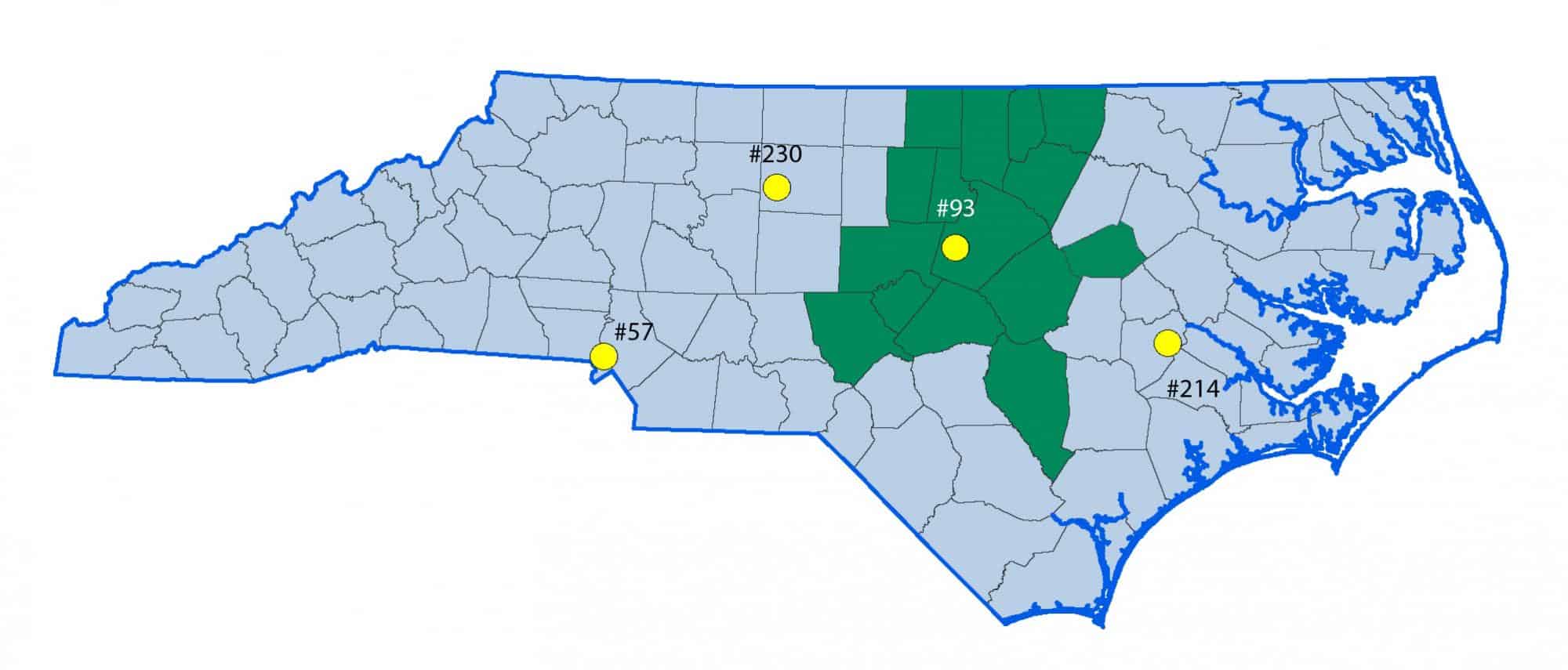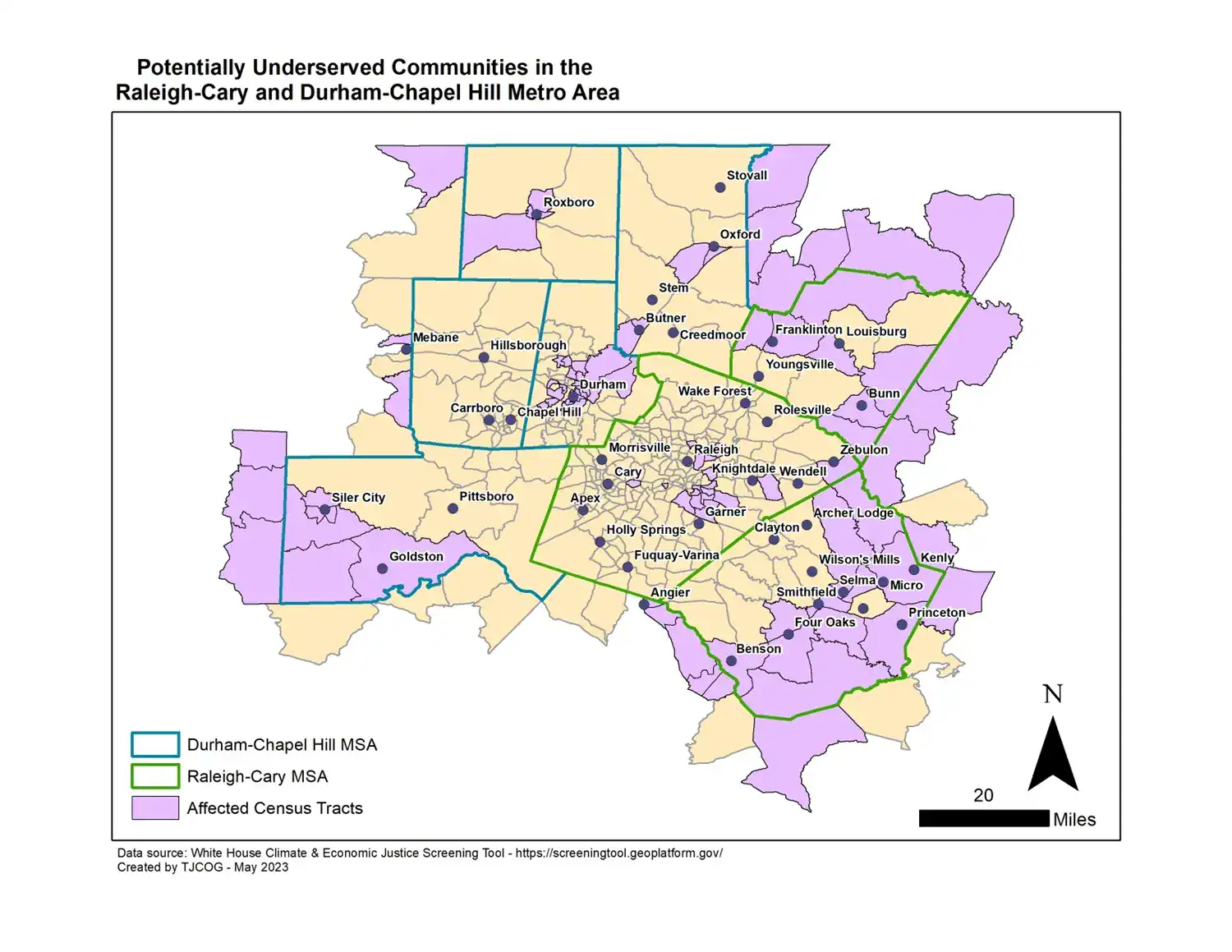
Potentially underserved communities in the Raleigh-Cary and Durham-Chapel Hill metro areas. Map created by TJCOG in May 2023 using the White House Climate and Economic Justice Screening Tool.
Environmental conditions do not affect every community in the same way.
Residents may face different levels of exposure to flooding, extreme heat, air or water pollution, energy costs and other environmental burdens. Those impacts can be especially significant in communities that already face economic or social barriers.
Central Pines developed the Guide to Environmental Justice in the Triangle Region to help local governments better understand that landscape and build stronger relationships with communities affected by environmental decisions. The legacy Climate page reports that the work identified 164 potentially underserved communities representing more than 370,000 people across the seven-county region.
Looking at Environmental Risk in Context
Environmental justice work looks at more than a single hazard. It considers where environmental burdens overlap with the people and communities that may have fewer resources to avoid, respond to or recover from those impacts.
The regional guide identifies concerns including air and water pollutants, hazardous-substance and waste sites, storage-tank facilities, brownfields, concentrated animal-feeding operations, household energy inequities, flooding and extreme heat.
Understand
Use data to identify communities where environmental burdens and other vulnerabilities may overlap.
Engage
Build relationships with residents and community-based organizations rather than relying only on technical analysis.
Plan
Use that understanding to improve planning, outreach and decisions about environmental investments.
The guide is not intended to determine a community’s priorities for it. Instead, it provides a foundation for local governments to better understand environmental conditions and begin more informed conversations with the people most affected.
That distinction matters. Data can show where certain hazards or vulnerabilities may exist, but effective environmental planning still depends on local knowledge, community engagement and continued partnership.
Using Environmental Data in a Local Planning Process?
Central Pines can help communities connect regional research with local planning, engagement and technical-assistance needs.